
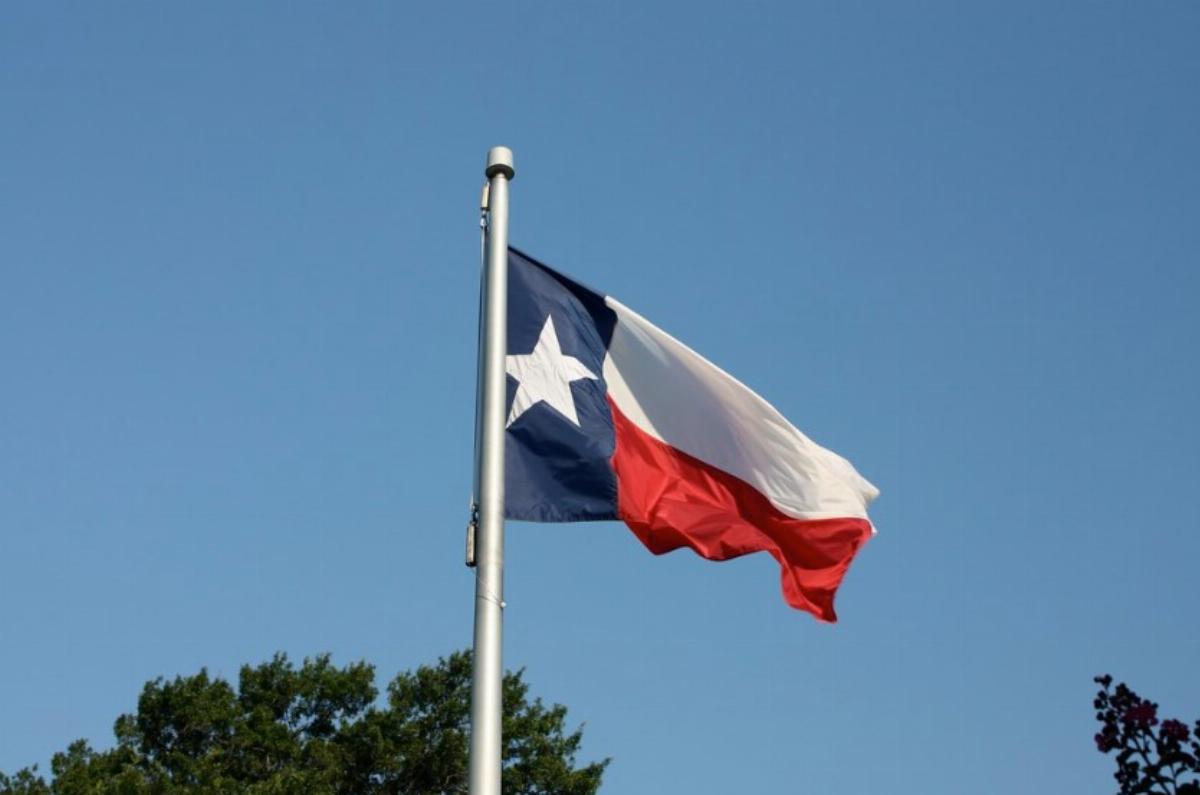
The Texas State Board of Education has voted to remove from the curriculum the “shot heard round the world” and any reference to the battles of Lexington and Concord. And the Black Robed Regiment is being deleted to make room for personages like Oprah Winfrey. According to Texas Scorecard, this has been brought about by the “Marxist Islamist History Alliance” — the Democrats, with the aid of three Republicans: Will Hickman, Keven Ellis, and Pam Little.
Read more Will Paramount object to Abdul El-Sayed’s apparent Blue’s Clues copyright violation?
Without the military battles and revolutionary ideas at America’s foundation, we are left with little more than a tax revolt as the basis for the Revolution. But at its root, the American Revolution is really America’s answer to the question: Where do our rights come from, the King of England or the God of Creation? Thomas Jefferson, in the Declaration of Independence, expresses the American mind thus:
We hold these truths to be self-evident, that all men are created equal, that they are endowed by their Creator with certain unalienable Rights …
In other words, we are all equal — yes, women, too, for in Jefferson’s day, the word “men” included women, as in the phrase “goodwill towards men.” This means we are all entitled to the same natural rights, because Nature’s God has granted us rights that cannot be separated (or alienated) from us — contrary to the policy of the British Crown.
John Adams wrote, “The Revolution was effected before the War commenced. The Revolution was in the minds and hearts of the people, a change in their religious sentiments of their duties and obligations.” This cultural revolution that preceded the Revolutionary War was led by spiritual leaders who collectively came to be called the “Black Robed Regiment.” These clergymen preached that, since we are all beings created in the image of God, we are — every one of us — entitled to the same natural rights.
Close to midnight, on April 18, 1775, when Paul Revere arrived at the home of the Reverend Jonas Clark, to warn John Hancock and Samuel Adams that the British were coming, Hancock asked Clark, a renowned member of the Black Robed Regiment, if the men of Lexington would fight. “I have trained them for this very hour,” Clark responded. “They will fight, and if need be, die under the shadow of the house of God.”
Some other pastors of the Black Robed Regiment were as follows:
The Reverend Peter Muhlenberg, preaching from Ecclesiastes on January 21, 1776, quoted its text: “For everything, there is a season. A time for peace and a time to fight,” at which point Muhlenberg emerged from behind the pulpit and removed his clerical robe to reveal a military uniform, proclaiming, “There is a time to fight. And that time is now!” He then asked his congregation, “Who among you are with me?” as he took his musket in hand and left the church. Inspired by his example, 300 men enlisted that day. According to Lydia Grace Richardson, “Muhlenberg’s brigade fought throughout rest of the war, including the fight against Cornwallis at the Battle of Yorktown.”
The Reverend Nathaniel Bartlett, of Redding, Connecticut, it has been reported, “lent his support to the war effort by officiating as Military Chaplain to Putnam’s Division during … the winter of 1778/79, and by storing military supplies in his house … even while local Tories (loyalists) threatened to hang him if they could catch him.” It is said of Bartlett that he “made his parish rounds with a loaded musket in one hand and a Bible in the other.”
Read more Becerra for governor? The disqualifier you didn’t know about
The Reverend James Caldwell, AKA “the Rebel High Priest,” fought in the Revolutionary War as chaplain of the 3rd Regiment N.J. Line. When the Continental Army ran out of artillery wadding for their cannons, during the Battle of Springfield, Caldwell took the hymnals authored by Isaac Watts from a local church and exclaimed to the artillerymen, “Give ’em Watts, boys!” Caldwell is famous for wearing his pistols while he preached. His wife was “shot and killed in a raid on his home as she held their infant child, during the Battle of Connecticut Farms (now Union). His church was used as a Continental Army hospital until it was burned by a Loyalist in 1780.” Caldwell himself was killed on November 24, 1781, “by a sentinel in a dispute over a package. It was suspected that the sentinel was in league with a British plot to assassinate the parson and the sentinel was tried and hanged.”
These brave men were but a few of the hundreds with black robes inspired by America’s Great Awakening. And it was their biblical principles, based upon God-given rights and justice for all, that led Americans to support the Revolutionary War all the way to its successful conclusion.
Although George Whitefield (pronounced “wit-field”) died in 1770, before the advent of the Revolutionary War, he was, as “America’s first celebrity,” perhaps the greatest inspiration to the members of the Black Robed Regiment. Per the Christian History Institute:
About 80 percent of all American colonists heard him [Whitefield] preach at least once. Other than royalty, he was perhaps the only living person whose name would have been recognized by any colonial American.
Preserving the truth about what the American Revolutionary war represented, and why it was worth fighting, must be supported at every level of education, in the face of any and all opposition by the Marxist-Islamist left. As Santayana warned, “when experience is not retained, as among savages, infancy is perpetual. Those who cannot remember the past are condemned to repeat it.”
Paul Dowling’s book on the Constitution is Keeping a Free Republic — downloadable for $2.99. Additionally, Paul has contributed to Independent Sentinel and Free Thought Matters.
Read more What’s going on in blue Maryland?
Image: Scazon via Flickr, CC BY 2.0.