
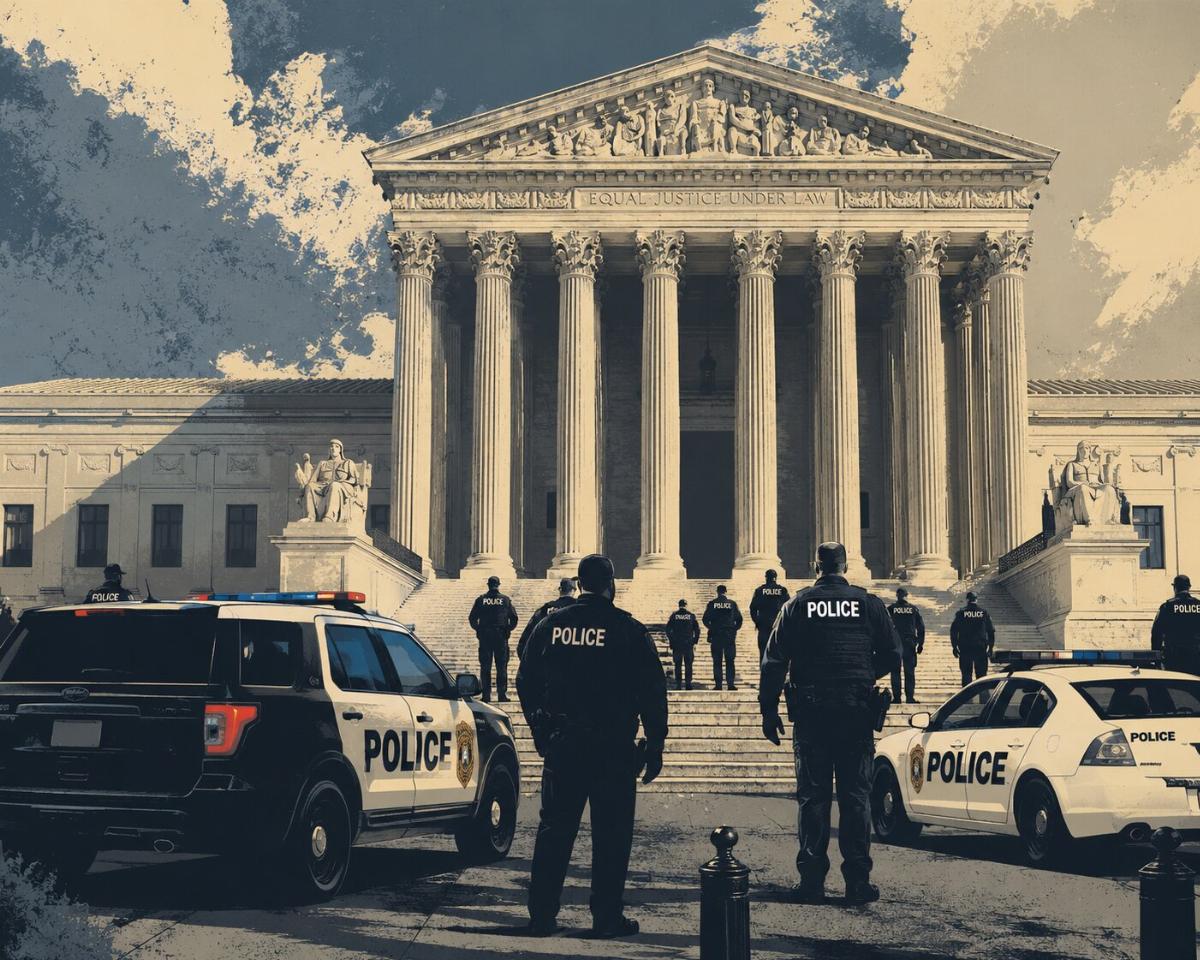
Once again, a Supreme Court justice, Amy Coney Barrett, was a victim of harassment, specifically swatting. On May 27, police were called to her residence by someone who reported a fake emergency; ordinarily her home would have been swamped by local law enforcement. In her case, the Supreme Court police identified it as a hoax before the local police were sent. When these events occur, they can be very dangerous to the police and home residents.
Read more Congress fumbles college sports
Swatting is not the only type of intimidation that is being inflicted upon public officials; doxxing is a method that divulges personal information, often on the internet, that people then use to harass and threaten the targets.
Members of Congress, cabinet officials, as well as religious institutions and corporations are more and more often victims of the despicable actions of doxxing and swatting. We haven’t readily defined those actions as domestic terrorism, but they are, in fact, precisely that. It’s time to hold the perpetrators accountable.
What is domestic terrorism?
The federal government defines domestic terrorism (DT) as ideologically driven crimes committed by individuals in the United States that are intended to intimidate or coerce a civilian population or influence the policy or conduct of a government.
[snip]
According to the FBI, domestic terrorists are Americans who commit violence to achieve their goals that stem from domestic, extremist ideological influence, and lack foreign direction or influence.
One of the most egregious swatters was a man named Thomas Szabo. He had a group of followers who assisted him in making swatting calls and fake bomb threats. He targeted more than 75 public officials, four religious institutions, and multiple journalists. In January 2021, he threatened to detonate explosives at the U.S. Capitol and kill the president-elect.
Eventually he was extradited from Romania in November 2024 and received a 48-month prison term.
Read more The SPLC is hoist by its own petard.
The threats from these activities can be serious and dangerous. Law enforcement, including local police and I.C.E. agents, are frequently targeted by protestors; these threats often extend to their families. Recently, a politically motivated hacking group leaked the personal data of nearly a thousand U.S. federal law enforcement officials, including agents from the Department of Homeland Security (DHS), Immigration and Customs Enforcement (ICE), and the Department of Justice (DOJ). These invasions of privacy can be frightening:
According to investigative findings, the breach was orchestrated by The Com, a hacker collective previously tied to politically charged leaks and high-profile cyberattacks. The attackers reportedly exfiltrated and published personal information belonging to 680 DHS employees, 190 DOJ officials, and 170 FBI staff members.
The data, which includes names, office locations, and private addresses, was verified by multiple journalists and appears authentic. The leak was announced on the Scattered LAPSUS$ Hunters Telegram channel, where the attackers taunted federal authorities and hinted at additional upcoming breaches.
These attacks are increasing in number and endangering our public figures:
The National Counterterrorism Innovation, Technology, and Education Center (NCITE) reported 133 federal criminal cases in 2025 involving threats against public officials, the highest since it began counting in 2013. Judges have learned to alert local police departments when they issue controversial opinions.
In his 2024 annual report on the judiciary, Chief Justice John Roberts said threats against judges had tripled. In the previous five years. U.S. marshals said they investigated more than 1,000 serious threats against federal judges.
The federal government is reluctant to call these acts domestic terrorism, due to the difficulty in prosecuting them. First, there is no path to formally charge a person with domestic terrorism; simply using the term can be controversial. What will it take for Congress to get serious about punishing these domestic terrorists? If they don’t take action soon, people are going to die.
Read more Could data centers turn Red America Blue?
Image generated by ChatGPT.