
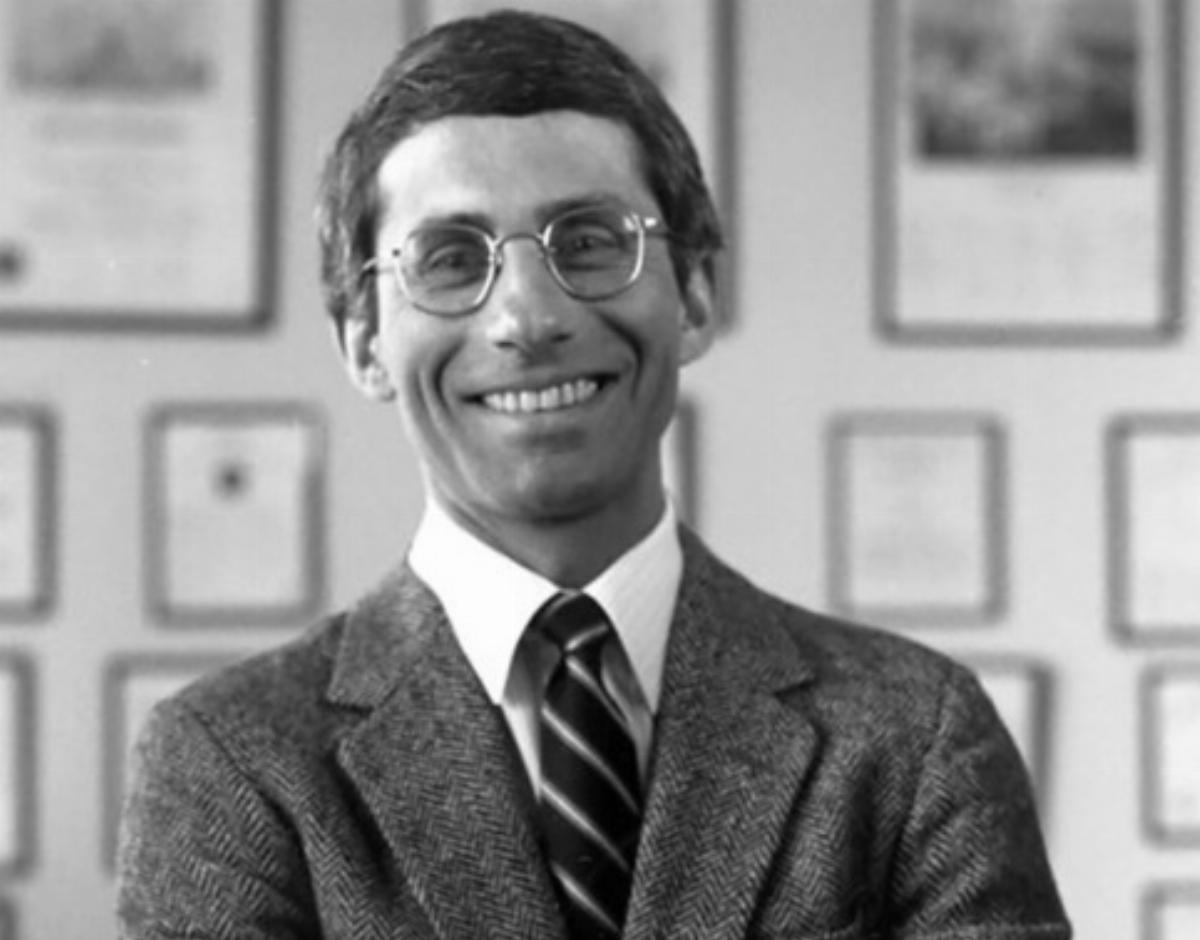
What is it about our memories that allows us to recall brief events from half a century ago clearly but leaves us unable to remember what we had for lunch yesterday—or whether we ate at all? Such is the mind of someone traipsing through the ninth decade of his life, trying to figure out just why some things stick like epoxy. One of those things is my glancing contact with Dr. Fauci half a century ago.
Read more A Democrat representative fears Christians but is copacetic with Islam
My personal link to the notorious doctor started in 1974, with a young man who was vomiting to death.
The man had been in excellent health until two months earlier, when he developed balance problems, trouble swallowing, and then nausea and vomiting. He had been hospitalized elsewhere a month before, but there was no diagnosis. His symptoms worsened, and he was referred to the university medical center where I was a resident physician.
Practicing medicine in those days was just plain hard, both in diagnosis and treatment. The hospital was full of very sick patients whom we often couldn’t diagnose with any certainty.
Try to imagine being a hospital doctor at 3:00 a.m. in a world without CT scans or MRIs, when the only laboratory tests quickly available were a blood count, a urinalysis—which you had to do yourself—a blood sugar test, and some estimate of basic kidney function. All other blood work took 12 to 24 hours to be reported.
You could get a chest X-ray, which was often crucial, and plain X-rays of the skull and abdomen, which were usually worthless. We could do an EKG, which we also had to interpret because the official EKG reader wouldn’t be at the hospital until the next afternoon.
Oh, woe was us! We had to think about our patients! We had to talk to them—for several minutes, at least.
We also had to examine them, which meant actually touching them, first deciding which of literally hundreds of possible physical tests we could perform to try to figure out what they had before they died on us. And they did die on us—too often.
Dr. Herb Fred, my cherished mentor, who brutalized me for a year until I learned to love him for what he taught me, often asked, “Why don’t people think?” We soon learned to repeat the answer: “Because thinking is painful, difficult, and time-consuming.”
But we didn’t have any choice, because we had patients who were dying, and we had to do something. In the case of this particular patient, we needed to keep him from starving to death. All we had was sugar and water to put in his veins, and we couldn’t give him enough calories that way to keep him alive.
He was vomiting 24/7 and was still losing weight even though we were tube-feeding him directly into his stomach. He threw it all up. He couldn’t sit up or stand without assistance because he had severe vertigo.
His chest X-ray suggested some kind of infection, and his spinal fluid was abnormal. Meningitis explained the vomiting, but what was its cause?
Our working diagnosis was that he had a fungus infecting his brain and lungs. Why was that? Because that was the experience of the senior specialists, physicians who had worked in large university medical centers for decades.
“I’ve seen a few patients like this.” Or, “He reminds me of a man we had here about 10 years ago.”
There were no computerized medical databases that could cross-index patients by their demographics, physical findings, laboratory results, and imaging results, and then give you a probability estimate of possible diagnoses. Instead, what we had were walking, talking encyclopedias of medicine—very special doctors who seemed to have read and retained everything.
We asked them to bring their special skills to the bedsides of our most complicated patients, and they always did, because they lived to help patients and teach young doctors. Genius and integrity combined—that was what they personified, and we revered them.
We took multiple samples to test for infection, but every test came up negative. Finally, we had a surgeon open his chest and perform an exploratory thoracotomy with a lung biopsy. It showed something no one suspected—a rare disease that used to be called Wegener’s granulomatosis (WG).
I thought it might be the correct diagnosis, but no one believed me, and I was far from certain. WG had never been reported to present with meningitis, and that was crucial.
Read more Socialism and Islam: A tale of two psychoses
You didn’t casually diagnose an already rare disease if you also had to account for something never before documented—especially if the diagnosis mandated the use of steroids for treatment.
Steroids! The horror! That was especially true for the neurologists, who were terrified at the thought of giving steroids to a patient with fungal meningitis, which is what they still thought he had despite all the negative tests. They believed it would be a death sentence, which was, in fact, true.
My argument was typical for that era: “He’s dying anyway! What do you have to lose?”
Back then, in addition to exploring the interiors of the chest and abdomen to try to figure out what our patients had, we also used exploratory therapy—giving medicine to a patient without a definite diagnosis to see whether it might make him better.
The neurologists agreed, and we started treatment combining a chemotherapy agent with high-dose prednisone. Within three days, he was dramatically better, and he continued to improve for several months.
But he was still having relapses of severe eye inflammation that required retreatment with steroids, so we sent him to the NIH in Bethesda for evaluation by Dr. Sheldon Wolff, the world’s leading authority on WG. Too late—Dr. Wolff had just taken a bigger job and had put the young Dr. Fauci in charge of patients referred to the institute.
I never met Dr. Fauci or communicated directly with him, but he phoned the senior attending physician and said that he agreed with our diagnosis and that we should continue the same treatment.
I wasn’t going to rely on a secondhand phone report, so I requested a copy of the medical records from Bethesda. They were shocking.
The doctors at the NIH did not agree with our diagnosis of WG—they thought he had something I will call LG. Dr. Fauci was the attending physician, and the notes in the Bethesda chart said that he agreed the patient had LG. But Dr. Fauci told our team that WG was the correct diagnosis.
I almost couldn’t believe it when I read the notes. This was unforgivable because our patient became the victim.
If he got worse and was referred back to Bethesda for reevaluation, he would have been given daily high-dose steroids, with inevitable, severe side effects. He was already doing well with our treatment, which required only occasional, brief courses of steroids.
Medical records did not travel with the patient in 1974. It often took weeks to get records from another institution.
Integrity among physicians was paramount then, when so much was unknown and unknowable, and there was so much suffering and death. The records were essential because they were part of The Chain—the chain of knowledge we hung on to as we groped forward, trying to learn as much about our patients as we could so that we could help them with the limited tools we had.
Dr. Fauci’s appearance before the Senate this week revealed much about the man, despite his refusal to testify. His diaries are most illuminating. Some people say that he changed because of all the fame and adulation he received during the COVID years.
I can’t look into anyone’s mind or soul. I can only record what I observed while trying to care for a dying young man.
Dr. Fauci was dishonest with his colleagues more than half a century ago, and there is no evidence that he ever changed.
He just finally got caught.
NIH photo. Public domain.
Dr. Atcheson’s unpublished pseudo-Victorian romantic murder mystery, The Spheres of the Universe, features a most diabolical physician – a psychopathic, narcissistic, serial killer. He welcomes correspondence at [email protected]