
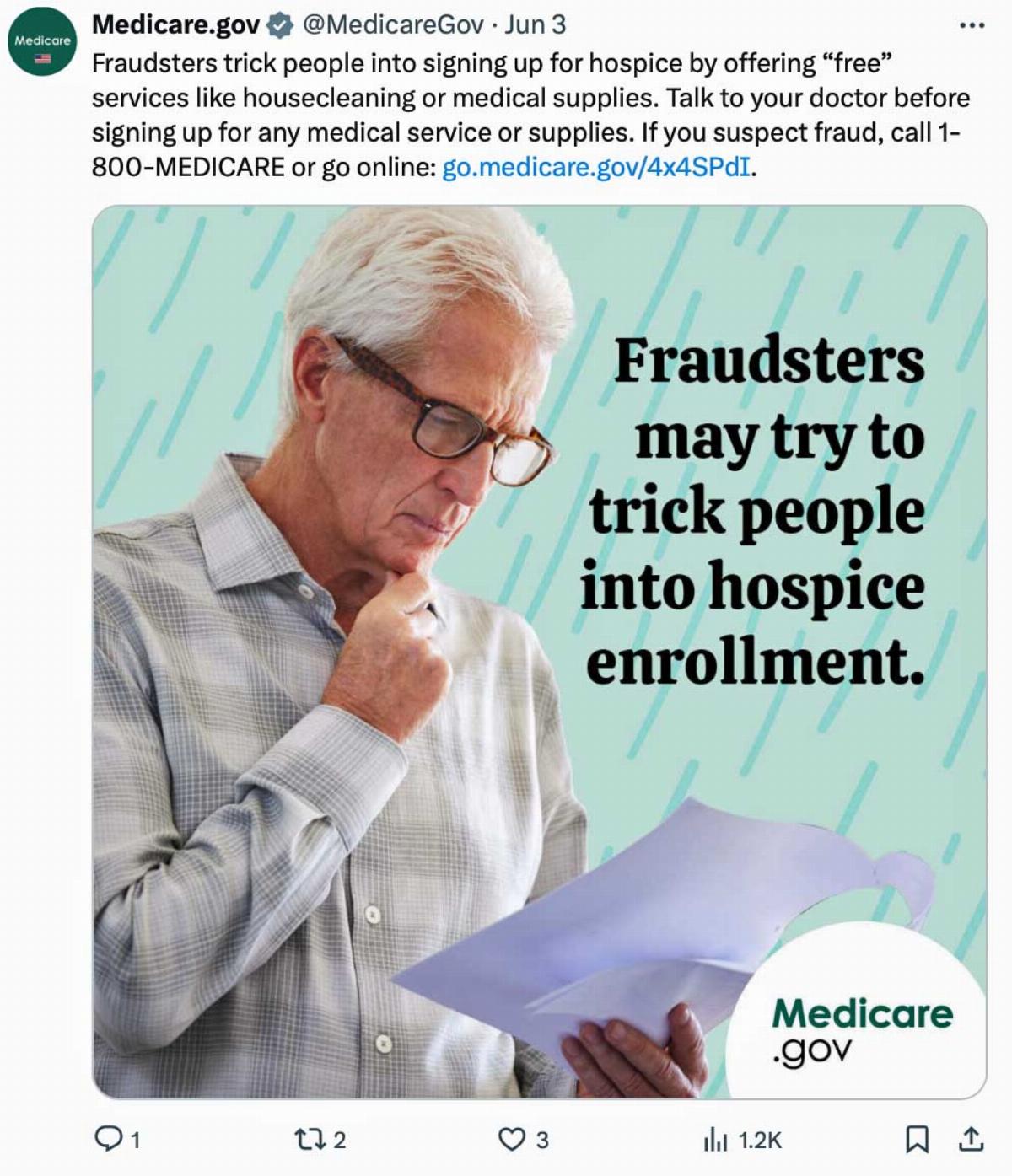
Recent revelations, such as rampant Medicare hospice fraud in Los Angeles and elsewhere in California, have eclipsed Minnesota fraud tales. Minnesota was once naively thought to be the fraud champion, but it appears California is worse—much worse. TheCenters for Medicare and Medicaid Services has recently cut off 800 LA hospices that bilked taxpayers for at least $1.4 billion in 2025. That virtually none of them complained reveals the nature of the fraud. If they were legitimately providing vital services for the dying, wouldn’t they, or the families of their patients, cry out at the loss of federal funding? Not if they know they were facing felony charges.
Read more Rush Was Right
Dr. Mehmet OZ, the CMMS Administrator, estimates $100 billion in annual Medicare fraud and more in related programs. At City Journal, David Goldhill tells us the fraud is by design and well known:
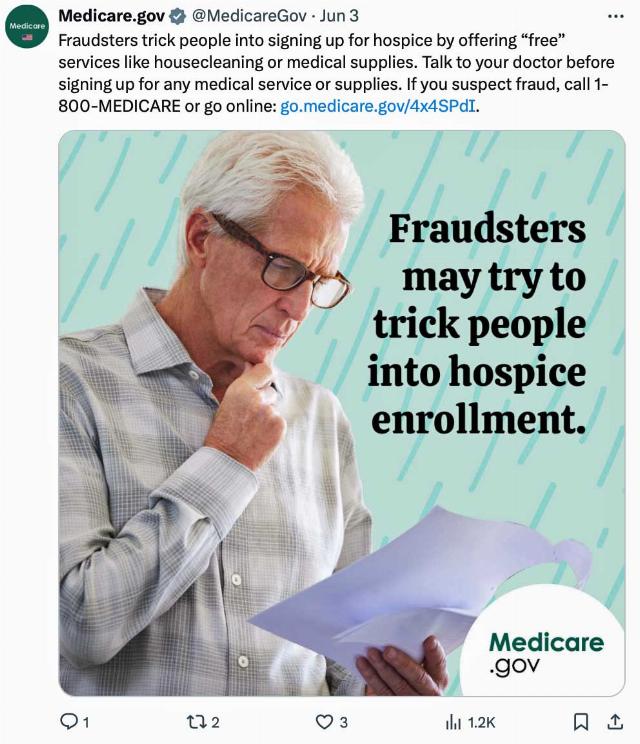
Graphic: X Post
Unfortunately, medical-payment fraud is not new. The Trump administration joins every other presidential administration since Medicare and Medicaid were created in announcing a crackdown. Congress has been equally constant: the Government Accountability Office has designated both programs as being high-risk for fraud for 23 consecutive years. [skip] The fraud, in other words, is baked in.
At the least, the law makes fraud easy, perhaps, inevitable:
That flaw is clearest in Medicare, which attempts something that no other major health system in the world tries: it promises to pay for essentially all health care that a senior needs—an open-ended guarantee with no defined limit. And it does so through an entitlement rather than a budget: spending is determined entirely by the volume of claims submitted and approved. There is no annual appropriation that constrains spending once exhausted, and no administrator empowered to say enough.
Goldhill mentions Canada and Europe as models that effectively control costs but doesn’t mention the enormous human cost. People get free health care—of a sort—but are forced to wait in agony for months, even years, for necessary surgeries like joint replacements. People often die while waiting for doctor appointments, and Canada has taken to offering to kill people rather than spend money treating them. Many Canadians willingly pay for prompt medical treatment in America.
Fraud is expensive for taxpayers, but Medicare’s lack of limits also generates excess care that harms patients directly. Medicare itself tens of billions spent each year on unnecessary—and often harmful—back surgeries, stents, knee arthroscopies, skin grafts, and diagnostic tests.
Medicaid fraud is somewhat different. The program is administered by states, but while individual patients often face limits on services, the federal commitment to states is itself an uncapped entitlement. The more spending a state can attribute to Medicaid, the more federal matching funds it receives. This makes state governments, unwittingly or not, partners in fraud.
Read more Does Iran already have nuclear weapons?
Goldhill is right about the inherent politics:
Consequently, Medicare and Medicaid fraud become the political gifts that keep on giving. Politicians can appear serious about health-care costs without confronting the hard decisions. They can chase bad actors while avoiding the thornier task of explaining that a promise originating in good faith 60 years ago can no longer be sustained.
There is no doubt that the system makes fraud easier, but much of it can be intercepted before money is disbursed, and the AI revolution ought to make that easier and more effective. There’s no excuse for government handing out money for non-existent hospice patients in nonexistent hospice facilities, or for people who died long ago. That’s a failing of the system only in that there aren’t enough people, or the wrong people, ensuring those kinds of things don’t happen. Paying a competent government employee $70,000 a year plus benefits to save millions is good government. So is demanding state recipients of federal money do the same. The current system is manifestly not.
A substantial part of the problem is Congress no longer legislates. It’s virtually impossible to change bad law or enact good law, and that’s not going to change anytime soon. Several Republicans recently stalled the SAVE America Act yet again, legislation wanted by at least 80% of the public, Democrat and Republican alike. Will Congress act on anything with less support? Certainly not.
The answer is not cutting Americans off from necessary care but focusing on eliminating and prosecuting fraud when and where it occurs, and not waiting for a competent, Republican President to gain office and work to claw back trillions long after the fraud has occurred. It may be that Medicare and Medicaid are unsustainable in the long term, but eliminating as much fraud as possible will prolong both programs.
Become a subscriber and get our weekly Friday newsletter with unique content from our editors. These essays alone are worth the cost of the subscription.
Mike McDaniel is a USAF veteran, classically trained musician, Japanese and European fencer, lifelong athlete, firearm instructor, retired police officer, and high school and college English teacher. He is a published author and blogger. His home blog is Stately McDaniel Manor.
Read more The Obama library that isn’t, isn’t drawing rave reviews