

Seventeen seventy-six was a year like no other. We recognize it, and very rightly celebrate it, as the birth year of America, the nation conceived in liberty.
Read more An Islamist ran for political office in New Jersey…and won
Here is the best known passage from America’s birth certificate:
We hold these truths to be self-evident, that all men are created equal, that they are endowed, by their Creator, with certain unalienable Rights, that among these are Life, Liberty, and the pursuit of Happiness.
These words, fulfilled in America’s astonishing success, upended politics everywhere, spelling the end of a world ruled by monarchs — tsars, emperors, kings — and their hangers-on. It also spelled the end of slavery, until then, like rule by monarchs, accepted virtually everywhere as simply normal.
Seventeen seventy-six also marked the beginning of an era of astonishing innovation and prosperity. America took the lead and showed the way in this transformation, too. Ordinary people the world over today enjoy conveniences and luxuries — cell phones and automobiles, air travel and television — unknown to those tsars, emperors, and kings who once ruled over kingdoms that — barring widespread disaster — changed very little or not at all for ordinary people from one generation to the next.
For a more complete understanding of the innovation and prosperity part of the story of 1776, we have to look to the Declaration’s twin, born in that same year. That fact was not a coincidence, because the twin was conceived in precisely the same deliberations as the ones that produced the Declaration.
Adam Smith’s Wealth of Nations is the charter of what is known today as free market economics. It introduced liberty into the world of economics in perfect complement to the Declaration’s vision of liberty in the political world.
Read more Vatican bigwig calls John Lennon’s ‘Imagine’ the ‘most beautiful song in the world’
“Unalienable rights” is the idea that set the Declaration apart from all that had gone before — and led directly to The Wealth of Nations also.
You and I and the American Founders owe a Scottish philosopher named Francis Hutcheson for that America-defining idea of unalienable rights. To be more precise, we owe him for making the distinction between alienable and unalienable rights. It is actually not far-fetched to say Hutcheson’s profound discussion of unalienable and alienable rights made both the Declaration and The Wealth of Nations possible. (“Alienable” simply means “capable of being transferred to the ownership of another.”) For more on this fascinating subject, I recommend this brief article of mine.
Hutcheson taught philosophy at the University of Glasgow from 1730 until his death in 1746. He mentored Adam Smith, who succeeded him in the same prestigious professorship. Their students, as if in perfect understanding that these ideas that were destined to transform the world needed to be established first in the New World, came to America on fire to share what they had learned. They mentored and taught Jefferson and Madison and Hamilton. The philosophy they brought to America — it is called Common Sense Realism — became the philosophy of the Founders and of the nation that came to be called the common sense nation.
For more on what America owes to Scotland’s common sense philosophers in this our 250th year, I recommend my book Common Sense Nation.
Robert Curry is the author of Common Sense Nation: Unlocking the Forgotten Power of the American Idea and Reclaiming Common Sense: Finding Truth in a Post-Truth World. Both are published by Encounter Books.
Read more Paul Krugman wants to nuke red America from orbit
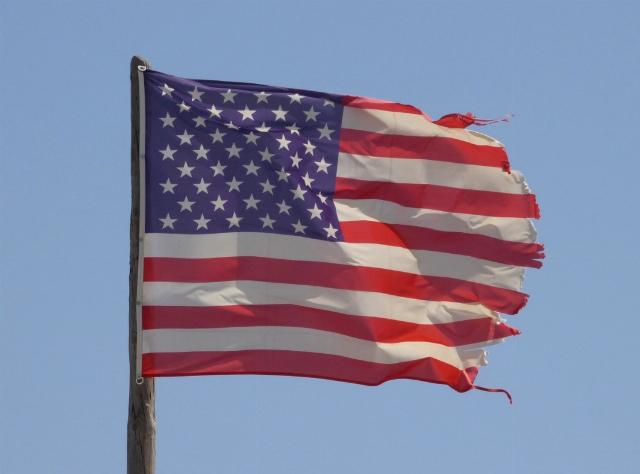
Image: Pashi via Pixabay, Pixabay License.