
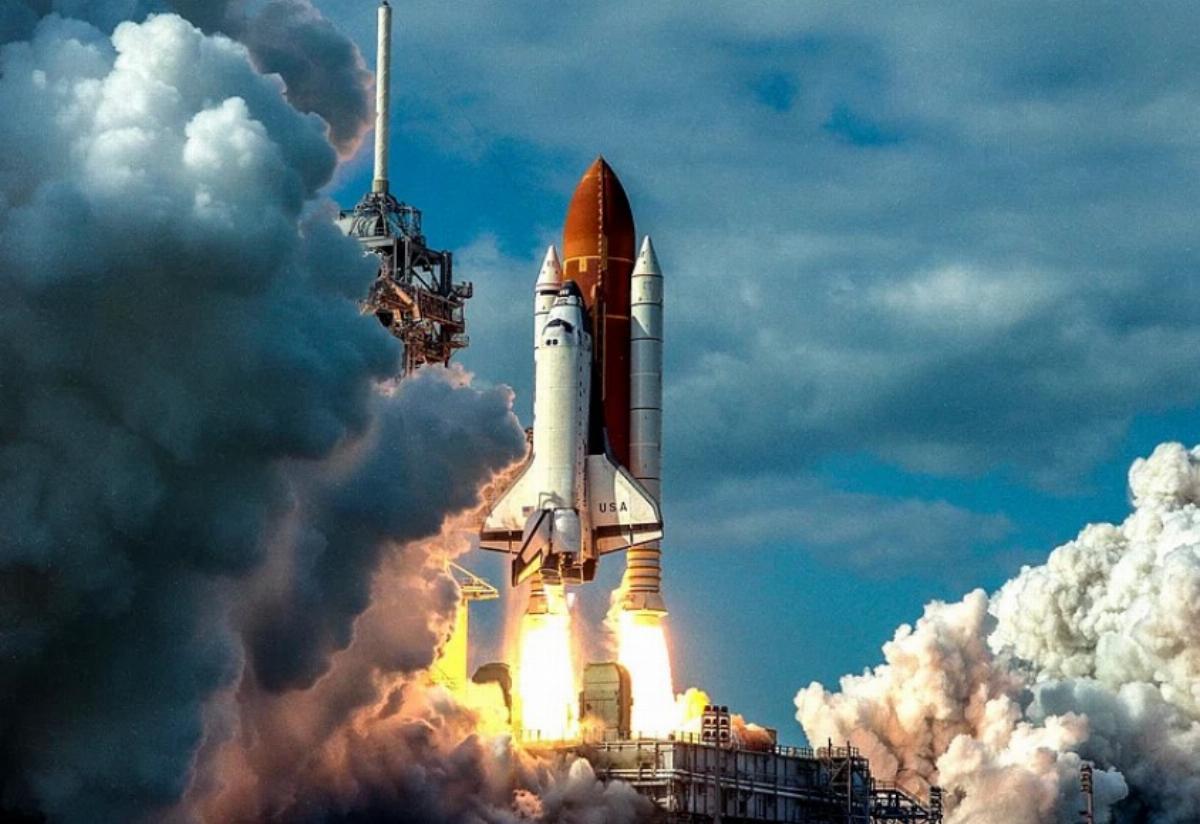
In the late 1960s, a boy left Havana in the middle of the night, and days later, he was standing on Merritt Island, Florida.
Read more Does Volkswagen have a Future?
I was that boy.
I didn’t know anything about American exceptionalism, about the great argument over liberty and government. I knew I had come to America, and almost immediately America began showing me things I had never seen: a new bicycle, chewing gum, Superman comics newer than 1960, ordinary pleasures that felt like evidence of a larger freedom.
And there were rockets. They rose almost every night. I didn’t understand the science. I only knew something extraordinary was happening, and that the future had been waiting for my arrival before roaring across Merritt Island on columns of fire.
For thousands of years, the world was an old place. Human beings walked, rode animals, sailed with the wind, cooked with fire, and lit the darkness with candles. Civilizations rose and fell, but the basic human experience remained stubbornly familiar.
Then, in 1776, the world roared.
America was where the Age of Discovery, the Scientific Revolution, and the Enlightenment became a living experiment. And with America came a question that changed the human condition: What if?
What if the old limits were not limits at all? What if a human being were free to wonder, experiment, invent, fail, and try again? What if a person could look at the world as it was and imagine it as it could be?
America didn’t invent curiosity. It created a place where curiosity could run. A thought became an experiment, an experiment became an invention, an invention became an industry that transformed the lives of millions. Someone looked at darkness and asked, What if we could make our own light? Someone looked at distance and asked, What if a message could travel faster than a horse? Someone looked at the sky and asked, What if human beings could fly? And someone looked at the Moon and asked the question waiting for humanity since the beginning: What if we could go there?
America kept answering with action.
Yes, let’s find out.
Let’s try.
Let’s build it.
And when we fail, let’s try again.
That is how a nation changes the world — not by declaring itself exceptional, but by doing exceptional things. America earned her exceptionalism in laboratories and machine shops, on farms and factory floors, in universities and garages, through inventors, engineers, and dreamers who refused to accept that yesterday had the final word.
She earned it with immigrants, too. People who came carrying little more than hope, talent, and a willingness to work. They did not diminish America by coming here. They became part of the engine.
I landed on Merritt Island at the exact moment America was doing something no civilization had ever done: leaving the planet. A boy arrives from the Caribbean, and within sight of where he is living, Americans are building machines to carry human beings into space. He doesn’t understand what he’s seeing. How could he? He’s a kid. But a child feels something before he has the words for it.
That instinct didn’t begin with the space program. America had been asking What if? since its founding. What if ordinary people could govern themselves? What if a person could own the fruits of his labor? What if an immigrant could become an American? What if a child born without wealth could rise by talent and determination alone?
Those questions built a culture that produced results, and fast. Two hundred years, that’s all, from a fragile declaration by thirteen colonies to human beings standing on the Moon; from a world powered by muscle, wind, and fire to one powered by electricity, engines, and information. The human race had waited thousands of years for that acceleration, and America stepped on the gas.
Read more California Still Needs Prop 39
Perhaps that is why the shining city on a hill resonates so deeply. Not because America was perfect, but because it was visible: a place where a human being could arrive with nothing and still possess a chance. A place where the son of a Cuban exile could stand on Merritt Island and watch his new country reach for the Moon, thinking, “I can do that, too.”
That is what I see when I look back at the country I entered as a boy: not perfection, but possibility; not a flawless record, but one that kept getting back up. Generations built what they were never simply handed.
The older I get, the more I understand what a gift that was. That is why I keep coming back to those two words. What if we can? What if we try? What if the next great discovery is still waiting, and somewhere tonight a child is looking upward, wondering whether human beings can someday go farther than the Moon?
Maybe she will. Maybe the next great inventor is already sitting in a classroom, already taking something apart just to see how it works, already staring at the stars.
That is America: not finished, not satisfied, still reaching for something further out. And God, I hope we never stop.
I know something now I could never have known then. That boy did not simply arrive in America. America arrived in him: the freedom, the possibility, the audacity to believe tomorrow could be better than today.
So yes, I believe that America is exceptional. Not because someone told me to, but because I can look at the evidence: where humanity began, what Americans built, the Moon, and the boy who came from Havana to stand beneath those rockets. We did this. We earned it. And I am damn proud to have become an American.
But I am not that boy anymore. The rockets stopped rising over my childhood decades ago, and I never did make it to the Moon myself. I became something more ordinary: a man who grew old on the soil his parents fled toward, who watched the country keep its promise even when it was inconvenient, even when the headlines said otherwise.
And now the ledger runs the other way. My children were born on this soil. Their children, and their children’s children, will be born on it, too. The generation that gave up everything so the rest of us could be free is buried in it. That is not a small inheritance. That is the whole point.
So I have told my sons, more times than either of them cares to count, that the American Dream is not a myth handed down at graduation ceremonies. It is still there, waiting to be seized, provided a man is willing to work for it.
Read more Democrats want to build a passenger train–in Texas?!
Maybe, I tell them, you could go to the Moon.
 Raw Pixel.” class=”wp-image-1295″ width=”640″ height=”439″ />
Image via Raw Pixel.