
The late, great Ray Charles hit the airwaves in 1969 with his song “If It Wasn’t for Bad Luck” he would have no luck at all. But one person whose life truly epitomized those lyrics was a 28-year-old Japanese man named Tsutomu Yamaguchi. His bad luck is forever cemented into World War II’s history.
Read more Gold isn’t returning — confidence is leaving.
Yamaguchi was in Hiroshima, Japan on August 6, 1945—the day the world’s first atomic bomb was dropped. Despite being severely burned by the blast, the next day he took the train home where he intended to spend time recovering from his wounds. Ironically, his home was in Nagasaki—the second city to be hit with an atomic weapon only three days later. Experiencing the bad luck of exposure to not one, but two atomic blasts, Yamaguchi could undoubtedly have identified with the Ray Charles message conveyed in his song.
In wishing for good luck, sometimes we might want to consider what consequences we may be inviting should it occur. Undoubtedly, Yamaguchi recognized his luck in surviving the Hiroshima bombing and getting away from the devastation—only to fall victim to bad luck again. It is similar to the bad luck Estonian citizens have suffered after experiencing what they rightfully thought was good luck.
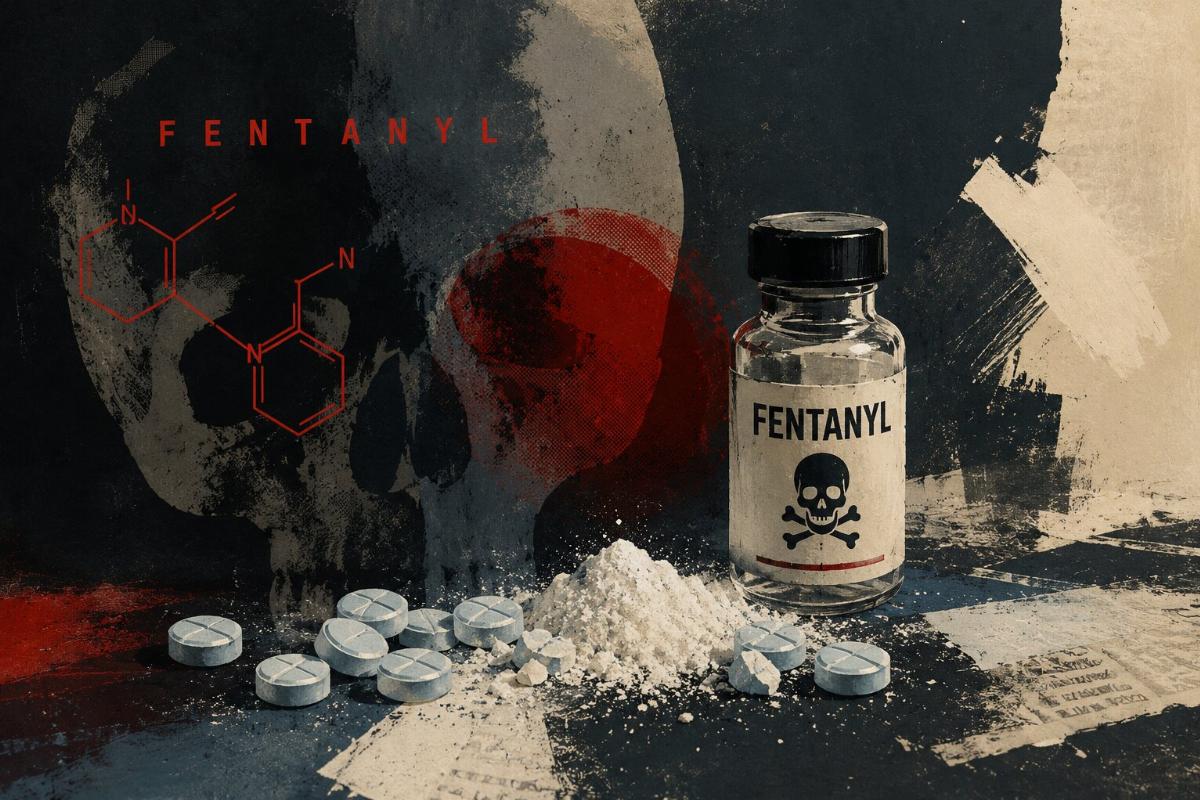
A decade ago, Estonia had a major fentanyl drug problem. Fentanyl had largely replaced heroin as the drug of choice since it was easier to make a synthetic drug than to grow heroin plants. Additionally, it was easier to smuggle, much more profitable, and, at 30x greater potency, it helped guarantee users stayed hooked, thus providing dealers with a future market.
Despite its relatively small geographic size and corresponding population of only 1.4 million, this Baltic state began battling the fentanyl epidemic—one claiming a death rate almost six times greater than Europe’s average. As such, unlike other countries in the region, Estonia recognized immediate action was necessary, looking forward to the day fentanyl would be largely eradicated from within its borders. To this end, Estonia conducted raids, passed new laws, and dismantled labs. By 2018, fentanyl overdose deaths had fallen more than 70%.
However, University of California San Francisco professor Daniel Ciccarone predicted there was both good news and bad about the illegal drug. While fentanyl’s demise was likely, the trajectory would move towards fully synthetic illegal drug replacements.
Ciccarone was right. While Estonia’s drug traffickers threw in the towel on selling fentanyl, they moved on to push replacements. One was nitazene—a synthetic opioid more than 40x stronger than fentanyl for which reason, perhaps, it is known as the “Frankenstein Opioid.” While developed 60 years ago as a potential pain relief medication, it was never approved for clinical use.
What is frightening, however, is that while it took fentanyl time to build up its killer reputation, and a newer drug known as cychlorphine—a synthetic opioid in a chemical compound sold as a designer drug—have done so in a comparative flash. Nitazenes were discovered in the U.S. in 2019. Cychlorphine has been found in five European countries since 2024, as well as the U.S. In fact, despite cychlorphine’s more recent discovery, it is credited already with having taken more lives than nitazenes. And, in the U.S. alone, the opioid crisis has cost an estimated $1 trillion.
Read more The lost art of letting people explain themselves
Due to the main source of its origin, fentanyl is called “China White.” It is unsurprising, therefore, that China is a major player in the synthetic drug market. It is a supplier of nitazenes and has been pumping the drug into Europe. Last year, both Estonia and Latvia suffered nearly 100 deaths related to its usage with death tallies in France and Ireland not far behind.
There are indications drug use in the U.S. will mirror what is happening in Estonia. Officials forewarn about an invasion of these synthetic drugs saying, “Be afraid. Be very, very afraid. It was so much easier when it was just heroin.” Longing for the good old days and simpler times of heroin trafficking, they note that the volume of synthetic narcotics being transported by mail is increasing, making detection more difficult.
One U.S. state is, like Estonia did with fentanyl years ago, definitely taking action—Maine.
Its Director of Opioid Response, Gordon Smith, recently attended a panel discussion to detail Maine’s four pillars approach to attacking the opioid problem. These include prevention, harm reduction, treatment, and recovery support. He also cited a major issue complicating his work. It is reminiscent of the one faced by Hester Prynne—the main character in Nathaniel Hawthorne’s 1850 novel “The Scarlet Letter.”
Prynne conceived a child in Puritan New England out of wedlock. Forced to wear the letter “A” for her act of adultery, she was disrespected by villagers for her sin. Smith tells us drug users trying to rehabilitate suffer a similar social stigma in trying to overcome their problem. He believes, with society embracing the right attitude, the problem can be more easily solved.
Unfortunately, what happens in Estonia won’t stay in Estonia. As explained, these new synthetic drugs are already here in the U.S., creating a most difficult time for Smith and others in fighting the battle that lies ahead. They will be confronted by a whole new level of challenges in a drug war, giving synthetic drug dealers the upper hand.
While we will never see a drug-free world, we can hope governments motivated by such a mindset will work together to limit the flow of synthetic drugs, or whatever the drug of choice in the future becomes. But we would do well to remember Yamaguchi who became a textbook example in the importance of never losing hope. He maintained confidence in his ability to overcome adversity despite the cards he had been dealt. It was that positive attitude that enabled him to survive an additional 65 years after the Nagasaki attack, dying in 2010 at the ripe old age of 93.
Read more A license to stay poor
Image generated by ChatGPT.