
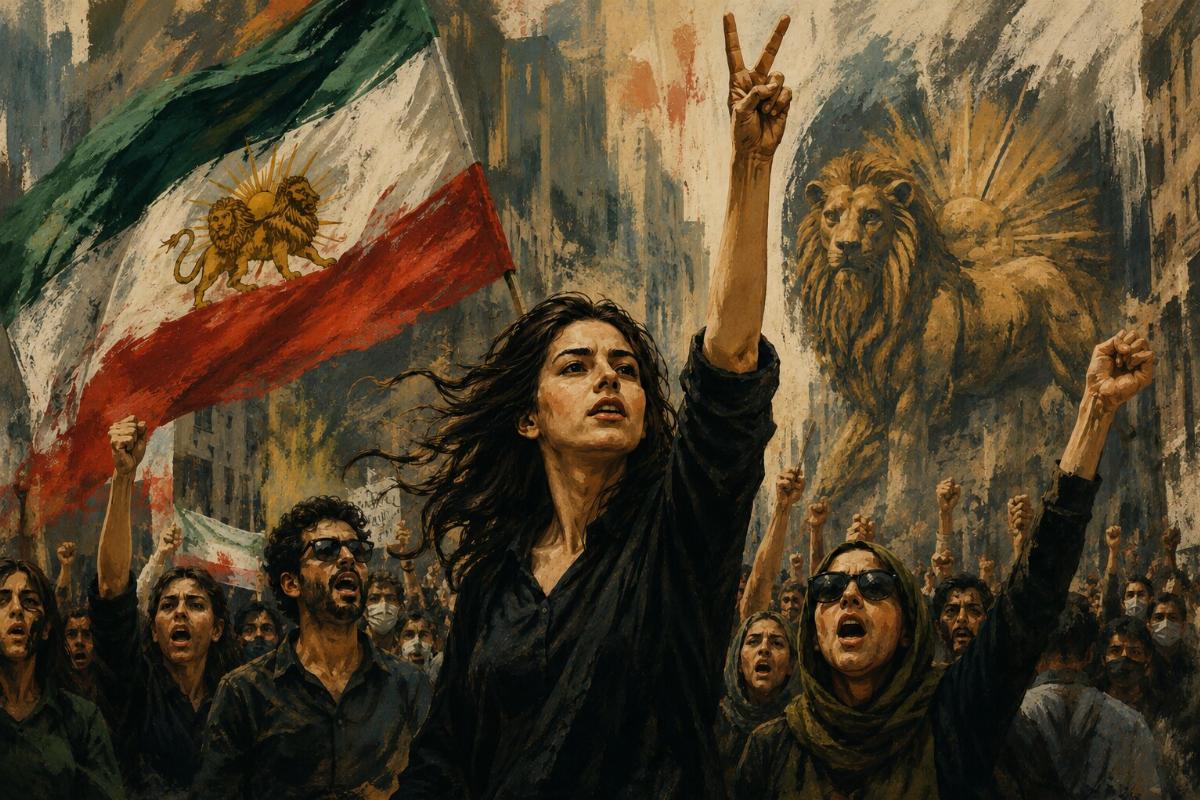
As American and Israeli strikes continue to hit military targets across Iran, many in Washington assume that the Islamic Republic’s greatest fear is another wave of air attacks. That assumption is understandable.
Read more ‘You’re fired!’ (But you can continue working several more months.)
Missile bases can be destroyed. Nuclear facilities can be damaged. Military commanders can be eliminated. But none of these targets explains the behavior of Iran’s rulers.
If bombs are what Tehran fears most, why does the regime devote so much of its energy to imprisoning students, shutting down the internet, executing political prisoners, and hunting its own dissidents? The answer is simple.
The Islamic Republic fears one thing more than American bombs: It fears losing control over the Iranian people. That fear explains much of the regime’s behavior.
When nationwide protests erupt, internet access is cut almost immediately. Thousands are arrested. Executions increase. Security forces flood the streets. These are not the actions of a government confident in its own legitimacy. They are the actions of a government trying desperately to prevent its greatest nightmare from becoming reality.
That nightmare is not an American airstrike. It is an organized challenge from inside Iran.
Contrary to a common assumption in the West, Iran is not facing only public frustration. It is also confronting organized resistance.
The best-known example is the Resistance Units, networks associated with the People’s Mojahedin Organization of Iran (MEK). According to the organization, nearly 2,000 of their members or supporters were arrested or disappeared during the nationwide January uprising. Days before the recent U.S. and Israeli strikes, these Resistance Units also claimed responsibility for an armed attack on a site linked to the office of Iran’s Supreme Leader.
Whatever one’s view of the MEK, the strategic point is straightforward. Iran’s rulers clearly regard organized resistance inside the country as a serious threat to their survival. Governments rarely devote enormous resources to eliminating opponents they consider politically irrelevant. Washington should ask why.
For decades, the United States has invested enormous military, diplomatic, and financial resources trying to change Tehran’s behavior from the outside.
Read more Making the White House fun again
Yet the regime itself keeps signaling that its greatest concern lies somewhere else. It fears the possibility that growing public anger could become organized enough to challenge its grip on power.
If American policymakers truly want to weaken the Islamic Republic, they should pay closer attention to what the regime fears most—not simply to what it possesses.
That does not mean the United States should abandon military deterrence. Iran’s missile program and regional proxy network remain genuine security threats. But military power alone cannot solve a political problem.
A government that survives by intimidating its own people is ultimately weakened not only by external pressure, but also by the growing loss of control at home.
That is why Washington should devote as much attention to the Iranian people as it does to Iran’s missiles. Supporting secure internet access during protests is one example. Every time the regime shuts down the internet, it isolates demonstrators from one another and from the outside world, making mass arrests and violent crackdowns far easier. Keeping Iranians connected dramatically raises the political cost of repression by making abuses harder to hide and far more difficult to carry out without international scrutiny.
The same principle should apply diplomatically. Progress on executions and political prisoners should become a standing issue in every major negotiation with Tehran—not an afterthought reserved for annual human-rights reports. Every concession the regime seeks should carry a political cost for its domestic repression.
Such a strategy would cost America far less than another prolonged military confrontation.
For decades, Washington has tried to weaken what the Islamic Republic builds. It is time to focus on what the regime fears losing most: its control over the Iranian people.
American bombs can destroy military targets. They cannot destroy the fear that keeps Iran’s rulers awake at night. That fear comes from the Iranian people. America’s Iran strategy should start there.
Read more In air we trust
Image generated by ChatGPT.