
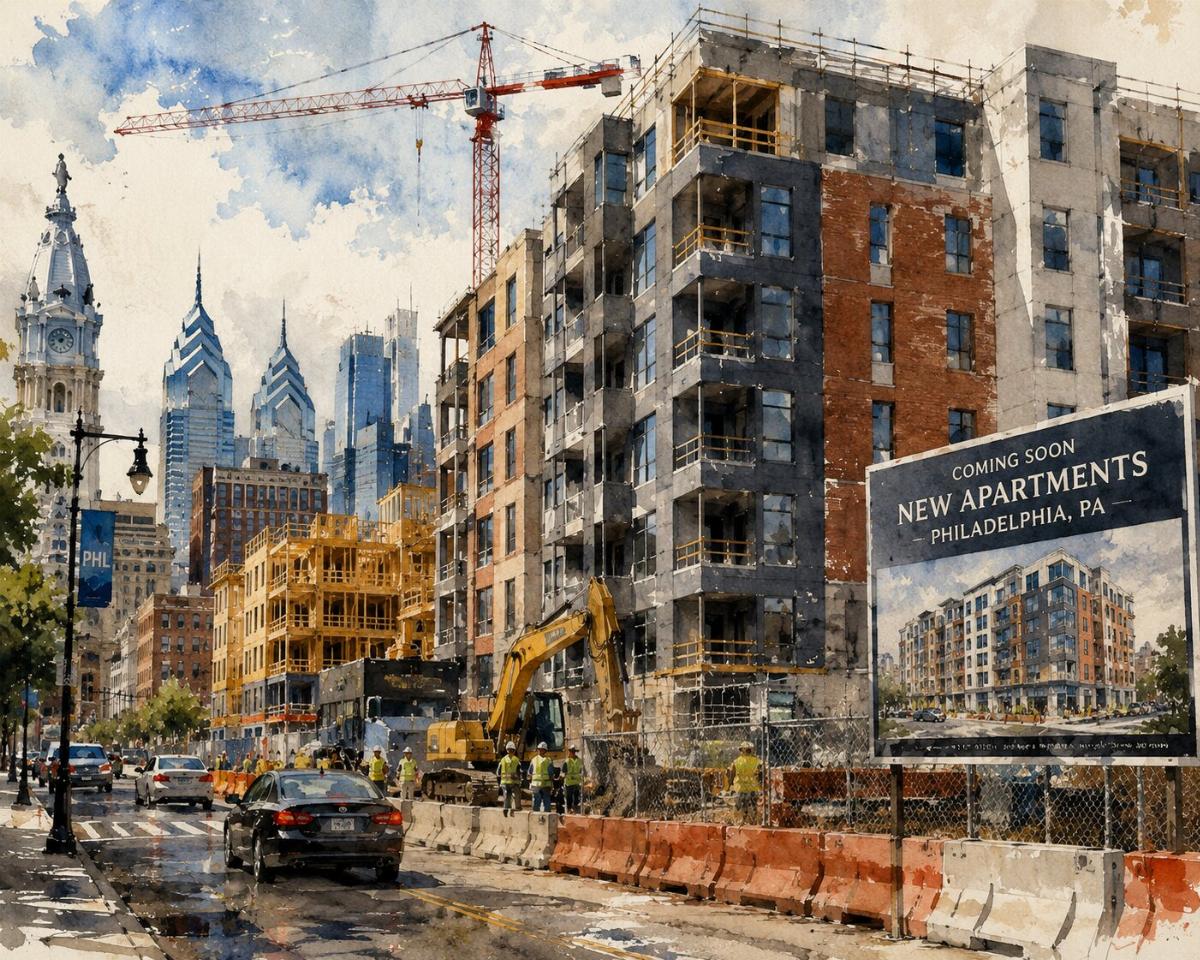
As a Philadelphian, I know that most city residents are now used to the “developer mania” that has laid claim to virtually every corner of the city, whether it’s West or East Philly, or in neighborhoods like Frankford, Kensington, or Port Richmond. This urban gentrification pattern is by now all too common: An old house goes up for sale but rather than rehab it, a New Yorker in a Tesla buys it and turns it into a construction site.
Read more Trump Is Righting Latin America
Days later, tractors and bulldozers invade the neighborhood; workmen sweat and begin building another $500k four- or five-story house in record time. The architecture of the new structure is familiar: large windows carved into a gray slate-like industrial frontage that looks shiny for about a year but then, as the exterior is exposed to the “grime” of the city, it ends up looking like a housing project in China.
If we were to critique these houses in terms of design, a major flaw would be the lack of real (cement or marble) steps leading to the front door; instead, what we get are fake wrought iron steps that look like they are straight from Home Depot, that any homeless scrapper with a pair of cutters could dismantle in less than an hour.
These houses for the most part have no character or soul, yet they all manage to have roof decks with lots of lights. Lights and superficial glitter are key. They are also not well constructed, mainly because they are built faster than the Amish put up Amish barns, but minus the Amish talent when it comes to craftsmanship.
The people who move into these structures seem to take on the “personality” of the dwelling. Let’s call this the Rod Serling effect. The attitude of the new arrivals mimics the coldness and minimalism of the building: as new neighbors, they become only a tiny (read: minimalist) part of the neighborhood. Their larger selves remain detached and objective, as if they are unsure about the “village” they now call home.
When they walk their dogs, they tend not to make eye contact with long-term neighbors, meaning people in standard houses with old doorframes and cement front steps. Should their dogs bark or growl at passerbys, their first reaction is to yank the leash and grumble a soft corrective to the animal, but rarely will they apologize to the person their little hairy terrier almost de-heeled.
They seem to be a race or a people apart, so one wants to tell them: “Maybe you shouldn’t have moved here because you don’t seem comfortable at all.”
But of course, they had to move here because the area was sold to them as “hot,” with tons of amenities like restaurants and cafes and gyms, although if truth be told, the more numerous amenities are Dollar Tree, Dunkin, Auto Zone, Pep Boys, and Five Below.
Many of these newbies, I’ve found, eventually put their minimalist homes up for sale, while many others stay put, still looking for the “hot” to appear. They keep the faith, hoping the “hotness” promised to them by real estate agents is just around the corner.
As time passes, however, and as the city seems to shut down earlier and earlier in the evening — imagine a muezzin with a microphone in a minaret announcing the 11 PM closure of all cafes, bars, and restaurants in a city that already sleeps too much — many of these holdouts begin to show their disappointment. It’s too late to move back to where they came from, and so they walk their dogs with a vengeance, meaning if it bites a stranger, all power to the little critter.
Philadelphia, of course, was much “hotter” in the Seventies and Eighties and even into the Nineties —but you can’t bring back time, and just have to move forward. But what does “forward” in this case mean?
Several months ago, I blogged about a new housing construction project in my immediate neighborhood. These gray-slate, Brutalist, big-window houses replaced a series of old garages that connected two small streets that neighbors used as a shortcut to get to the nearby Fishtown Crossing Shopping Center.
The houses were billed as smart-looking, upscale units for smart out-of-towners who wanted to give city life a try. On the drawing board the houses seemed to have a special appeal; they were certainly a stark improvement over the dilapidated garages that served as storage bins.
But with new houses comes new people and more crowded spaces.
Construction began in January of 2020 and stopped completely in April because of the Covid lockdown. All construction in the city was halted then, so the project, even the adjoining porta-potties, sat empty for more than a year.
When the houses were built, they sat empty for a long time. Then one fine day I spotted incremental signs of life: Lights on inside; a big “Bernie” sign in a bay window; a sign advertising “Narvana” in another window. Eventually I did see people, but most of the time the newcomers seemed to go in and out when I wasn’t looking. When I would pass these residents in the street, they tended to keep their eyes glued to the pavement as if they were chronically depressed.
Overnight, it seemed, the gray slate houses lost their shiny luster. “For sale” signs appeared. The upscale look of new construction faded. Trash and litter appeared on the fringes of the property, but the “Bernie” sign remained, a symbolic nod to Democratic socialism.
Read more Western Governments Have a Shelf Life
One of the neighbors there, a foreigner (but not from Western or Eastern Europe), raised a major ruckus and threatened certain long-term neighbors with violence when they continued to use the famous shortcut to the shopping center. Voices were raised, fingers pointed, and there were threats of building a wall or a fence to keep the longtime neighbors out. Division and disunity — never a staple of this peaceful, Olde Richmond Philadelphia neighborhood — came not from well-established neighbors but from the newcomers, the “urban migrants,” who invaded from other cities.
It occurred to me that perhaps this once-wonderful upscale housing project had been purchased by the Philadelphia Housing Authority (PHA). Currently, PHA is spending hundreds of millions of dollars to buy existing, privately-owned apartment buildings throughout the city. Instead of waiting years to build new homes, the agency is purchasing properties directly from private developers. This is happening all over the city.
A few blocks over, another upscale condo complex sold out after a couple of years to PHA. Shortly after the new residents moved in, one of the tenants was out on the street brandishing a gun as friends of hers from the development attempted to talk her out of doing anything crazy.
At the time, I recall thinking, “I believe America is the only country in the world that will force ne’re-do-wells upon the do wells and expect great results.”
The situation reminded me somewhat of Lionel Shriver’s latest novel, “A Better Life,” where a New York City migrant housing program leads to the destruction of the home and life of a suicidal empathetic progressive white woman who invites a homeless migrant into her home. As a reward for her sacrifice, the progressive New Yorker is subject to a series of house-related physical assaults that does not end well.
Section 8, you might say, is the domestic woke version of former President Biden’s open borders policy.
In a column titled, “President Trump, Veto the Housing Bill!,” Ann Coulter wrote that the housing bill awaiting the president’s signature would expand Section 8 housing and have dire consequences.
Coulter’s view is that Section 8 is “a government program to move violent, gun-happy, drug-dealing welfare recipients from inner-city public housing units into previously safe neighborhoods. The theory is that if only criminals lived in nice middle-class areas, they’d get jobs and become productive members of society!”
She’s right, of course.
Coulter added that liberals are forbidden by their own ideology from criticizing welfare dependency, single motherhood, drug use or criminality, but put the dysfunctional behavior blame on… zip codes.
“Instead of addressing why people might not want to live in places where they get mugged, Congress decided to move the bad neighborhoods to them. Work ethic, orderliness, respect for the law — irrelevant! It’s location, location, location,” she concluded.
Hence the woman with the gun in what used to be a soft-bed retreat for ex-Manhattanites.
A few weeks ago, those “Bernie” neighbors got their wish. They were successful in installing a wall on one end of the “shortcut” alleyway. I was on my way to the shopping center when a female neighbor told me about the installation.
“All the people who live there were outside applauding as they watched the fence go up,” she said.
The days of the “good guy” developer who comes to your city neighborhood with promises to build a shiny housing project that will enhance the neighborhood are over because hidden in their slick sales pitch, they’ve baked in an “affordable housing” caveat.
One thing is certain: In any new glitzy urban apartment complex, 1/4 of the units will be “ghetto people” and it will be a war zone for a few years before it all becomes all Section 8.
Read more The Making Of A Manchurian Party
Image generated by ChatGPT.