
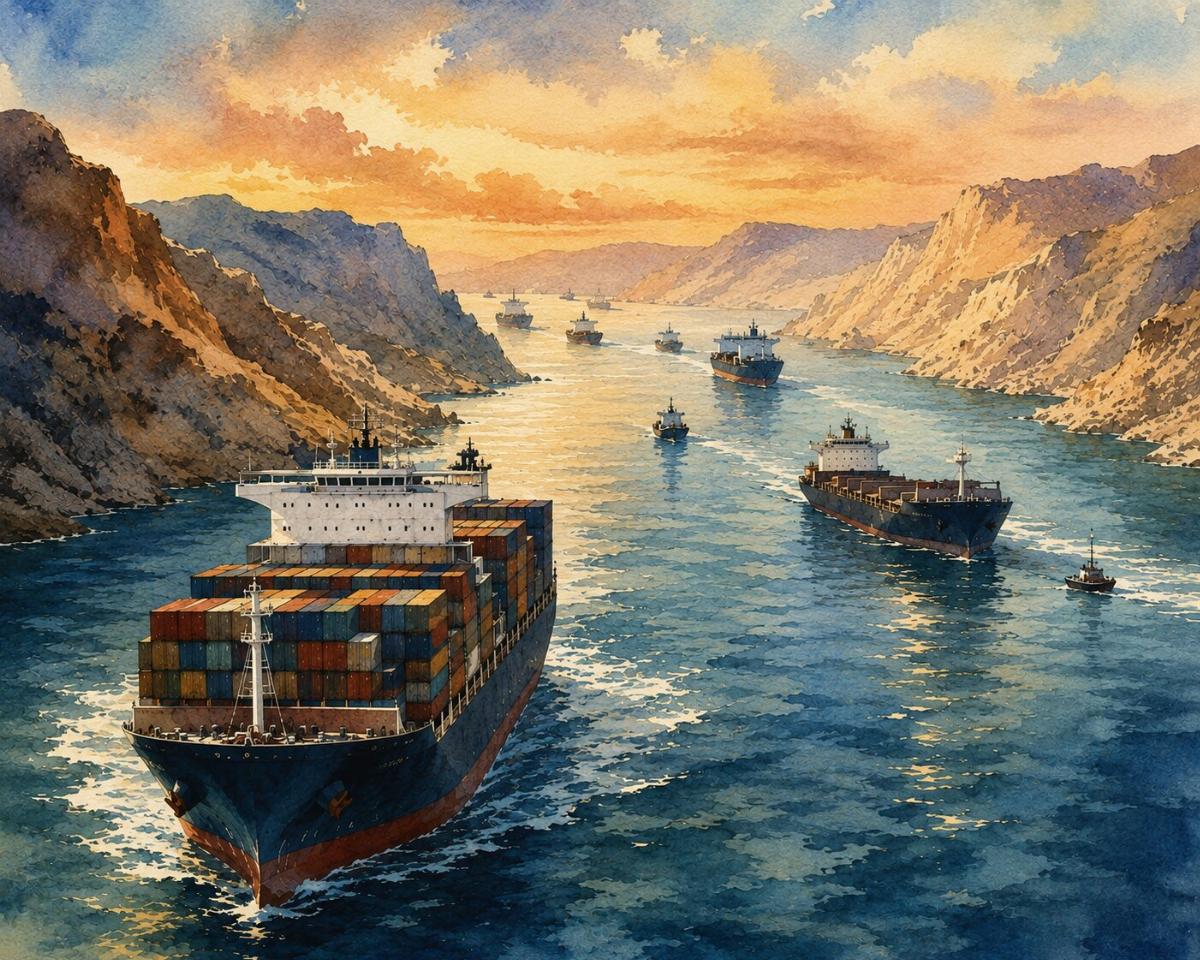
Donald Trump can order a strike. He can give the Pentagon a mission. He can say the Strait of Hormuz will remain open. But even the president of the United States cannot create confidence by executive order. The latest crisis in Hormuz shows that America’s war with Iran has entered a phase that can no longer be measured only by bombs, warships, or destroyed targets. The real question now is whether global markets believe Washington’s claim that the route is safe.
Read more Almost half of U.S. Muslims favor Hamas
This is where America’s policy of limited strikes runs into reality. Washington can hit Iranian targets and say deterrence has been restored. But the Strait of Hormuz is truly open only when ships pass through it, insurers provide coverage, energy traders believe cargoes will arrive, and captains do not feel that entering the route means walking into an expensive gamble. Reuters has reported that after the recent attacks on ships, the risk level for transiting Hormuz was raised to “severe”, reviving concern over the security of one of the world’s most important energy chokepoints.
Supporters of a hardline policy in Washington say the answer is obvious: more power, more strikes, more military presence. In their view, if America hits, Iran backs down; if U.S. warships are in the region, ships move; and if the White House issues a warning, markets calm down. It is the same familiar formula sold in the Middle East for years: a little more force, a little more pressure, a slightly more precise operation, and then the promise of victory.
But the American people have seen this movie before. Hormuz is not just a military problem; it is a commercial nervous system. Energy markets are not calmed by a press conference, a slogan about deterrence, or a show of force. Markets work with probability. If the probability of attack, seizure, miscalculation, or closure rises, the cost rises with it. An insurer does not wait to see which side wins the political debate in Washington before raising premiums. A shipowner does not ask permission from the capital’s think tanks before delaying a voyage. He looks at risk.
The signs of this shift are already visible. Some war-risk insurers have advised shipowners to pause Hormuz voyages, while others have reviewed policy terms after the latest attacks. War-risk insurance, which is usually offered for short periods and reviewed constantly, has increased for vessels in the Gulf. That means even if the U.S. government considers the route militarily open, the market can treat it as economically half-closed.
This is where the difference between destructive power and reassuring power becomes clear. The United States can still strike launchers, bases, radars, and command centers. No one doubts America’s military capability. The issue is that military capability does not always translate into political, economic, or psychological control. Washington cannot force an insurance company to ignore a missile attack. It cannot persuade a tanker owner to treat Hormuz like an ordinary route when some ships are switching off their public tracking systems and some voyages are slowing or stopping altogether.
The numbers point to the same reality. Reuters reported that tanker traffic through Hormuz came close to a standstill at one point, with only two tankers observed transiting in the early hours of the day. Shipping sources also said more vessels were turning off their AIS tracking systems. That behavior matters more than any official statement. When ships turn off their lights, it means the market has not believed the politicians’ reassurance.
Iran is counting on precisely this gap. Tehran does not have to defeat the U.S. Navy or fully close the strait in order to impose costs. It only has to turn passage through Hormuz into an expensive, uncertain, and dangerous decision. That doubt becomes higher insurance premiums, higher shipping rates, delayed cargoes, and pressure on energy prices. Under those conditions, even an open strait can function like a half-closed one.
These costs do not stay in the Persian Gulf. Eventually, they reach gasoline, diesel, aviation fuel, transportation, supply chains, and the pockets of American families. That is the part Washington’s political class usually remembers only after a crisis begins. A war that was supposed to be a display of strength has become a question about the price of risk. Even as some LNG and Japan-linked vessels continued to transit Hormuz, the broader slowdown showed the same reality: the administration can call the next strike “limited,” “calibrated,” or “defensive,” but the market translates it into its own language: How dangerous is Hormuz, and who will pay for crossing it?
The lesson of Hormuz for Washington is simple but bitter. America still has the power to punish. It no longer has automatic power to reassure. A superpower can strike a target and still fail to restore confidence. It can announce that a waterway is open and watch ships move more slowly, more cautiously, and with their lights off. If insurers hesitate, shipowners pause, and energy markets take the danger more seriously than political statements, the war has not been contained.
It has merely moved from the battlefield to the balance sheet. Trump wanted to show that Iran could be pushed back by strength. But Hormuz now reveals a more uncomfortable truth: American power can still destroy, but it cannot manufacture belief. For a country that was supposed to move away from endless Middle Eastern wars, getting trapped in a conflict whose price is paid by markets, insurers, truck drivers, and American families is not victory. It is the same old swamp under a new name.
Read more The Nolan Wells case fuels anti-white racism
Image generated by ChatGPT.