
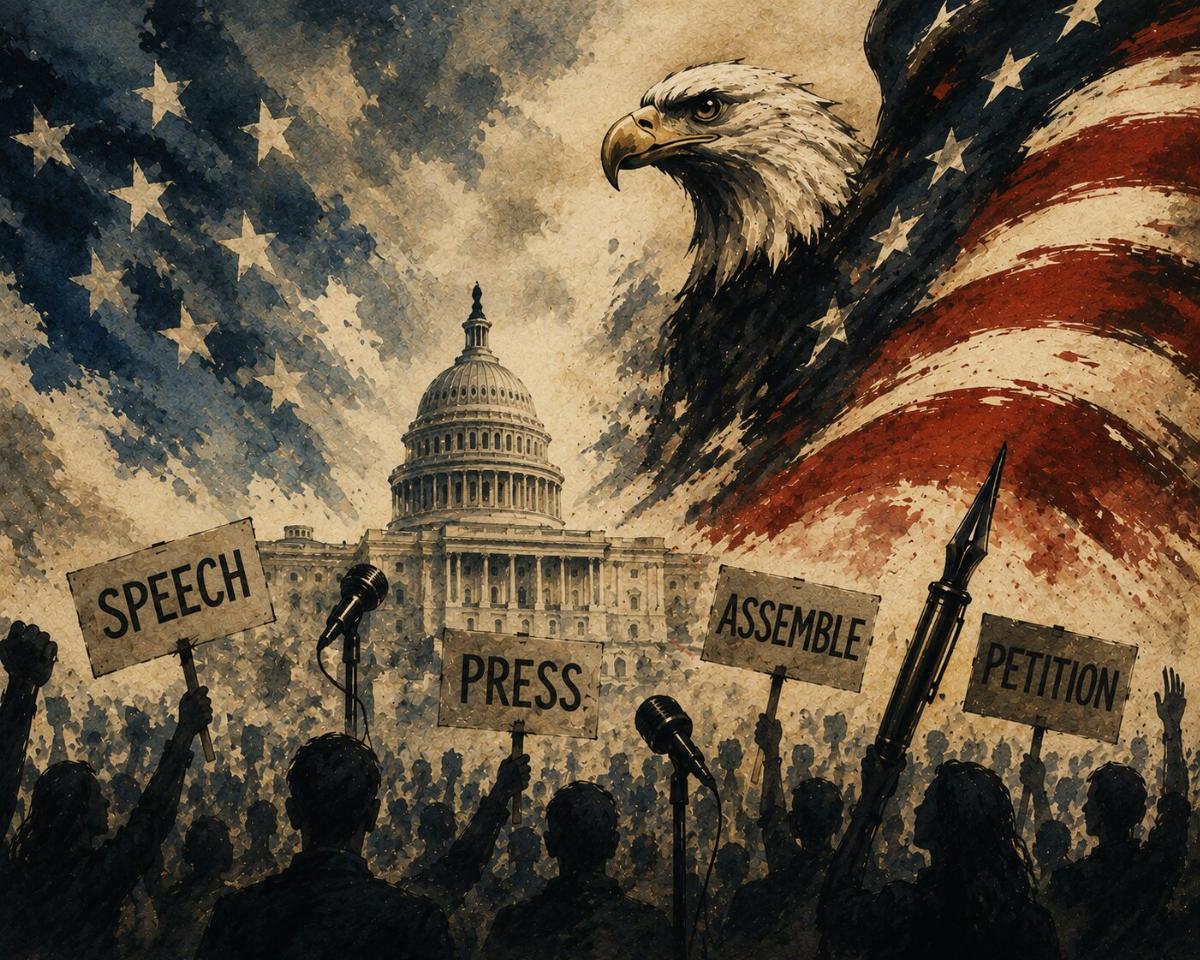
The media has gone on a First Amendment rampage after the FBI delivered subpoenas to several New York Times (NYT) reporters. The four are to appear before a grand jury to identify their sources for a story they wrote disclosing classified information concerning President Donald Trump’s new Air Force One. He flew to Turkey via the new Qatari-gifted aircraft—just recently activated—but returned to the U.S. using the older Air Force One plane. It left inquiring minds wondering why.
Read more Millennials and Zoomers need the ROAD to Housing Act. Right now.
Apparently, these reporters learned exactly why and ran with the story, although they undoubtedly knew what they were revealing was sensitive. Their story clearly endangered the president’s future use of the plane on trips, especially those of an international nature. Yet, a self-serving media put the focus of the subpoena protest on a U.S. government effort to punish “watchdogs” rather than on accountability and plugging classified information leaks.
There was a valid security reason for Trump not using the Qatari-gifted aircraft. It, unlike the U.S.-made plane, had no anti-missile defense system. Especially operating in one of the hottest regions of the world, this greatly impacted presidential security.
While an unprecedented three domestic assassination attempts have already been made against Trump, the danger to him, the aircraft and its crew, especially during an on-again, off-again war with Iran that is now on-again, should be obvious to all. Greatly increasing this risk is the “kill Trump” campaign Tehran has announced it is undertaking.
A statement issued by the NYT defense lawyer criticized delivery of the subpoenas with the claim, “The appearance of federal law enforcement agents on the doorstep of news reporters should shock the conscience of any American who believes in the Constitution and the press freedom it protects.” While this might normally be a proper defense, it should not be in this instance. The First Amendment protection given to journalists is not without limitation and just such a limitation, arguably, is applicable in this case.
The NYT got its two-cents worth in calling the subpoena action a “brazen” move, only seeking to intimidate journalists who were revealing flaws in a key symbol of American power. Such a claim has had merit in other cases involving the release of classified information as it was determined that the benefit to the people in learning the truth outweighed the need for government secrecy. Such was the 1967 case during the Vietnam war involving, unsurprisingly, the NYT again and its effort to publish the Pentagon Papers.
The reporters’ appearance before a grand jury is currently scheduled for July 15.
Read more The radical left insurgency
The media—long unfriendly to Trump—are not taking the subpoenas lightly. The president of the Reporters Committee for Freedom of the Press criticized Trump’s “war on the press” as “looking for another victim.” He added the subpoenas, “break from longstanding Justice Department practice to protect the public interest and press independence by requiring prosecutors to only seek information from reporters as a last resort when all other avenues have been exhausted.”
But, what is most pertinent in this case is that the information in the story that the reporters published was classified. Thus, someone who had been entrusted with it violated their oath as they were unauthorized to share it with the journalists. The act of doing so was not only inexcusable, but a criminal one as well. Thus, the purpose of the subpoenas is not to prosecute the reporters—who are protected by the First Amendment despite revealing it—but to identify the leaker(s) who did not have any similar protection.
It is most important that reporters are able to protect their sources of information, enabling them to speak freely. However, efforts to pass a shield law totally protecting journalists have failed. And, in the 1972 case of Branzburg v. Hayes, the Supreme Court of the United States (SCOTUS) addressed the issue of press protection, imposing a limitation upon it. Recognizing “news gathering is not without First Amendment protections,” the Court went on to find “newsmen are not exempt from the normal duty of appearing before a grand jury and answering questions relevant to a criminal investigation.”
It is the release of classified information in the NYT story by an entrusted party that has now triggered a criminal investigation to identify a source who acted criminally. Dismissing the subpoenas gives a free ride to one entrusted with classified information to secretly reveal it. As SCOTUS has not revisited the Branzburg issue since 1972, the mandate for journalists to testify when a criminal investigation is involved remains the law of the land.
As the subpoenas in this case are the products of a criminal investigation to identify and prosecute a leaker or leakers, the First Amendment should take a bent knee to the issue of these reporters disclosing their source(s). One of the concerns in Branzburg was whether there was a compelling reason for obtaining the classified information. In this case, only one logical reason exists for obtaining and disclosing it and that was purely political—i.e., to put Trump at additional risk. There was absolutely no compelling public interest in its disclosure.
It is imperative a limitation such as that imposed by the Branzburg case exists to deny journalists total absolution. While criminal investigations must allow a guilty party to raise the Fifth Amendment against self-incrimination as protection, there is no compelling reason for allowing a journalist to exercise a First Amendment protection on behalf of one who has criminally violated a sacred trust.
Read more From flexible to brittle, from resilient to heroic
Image generated by ChatGPT.