
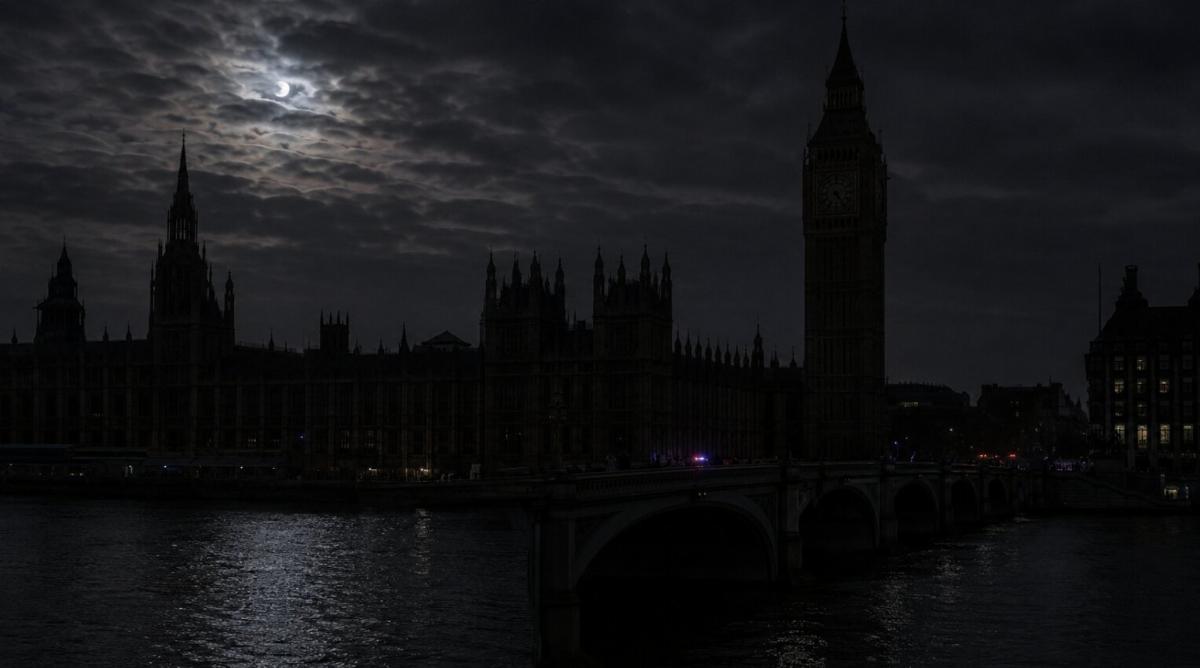
Electricity is not a commodity that can be easily stored. With few exceptions, electricity is consumed the moment that it is generated. However, grid planners in Great Britain have not been overly concerned with that fact. As a result, the UK is enduring the delights that only a weather-dependent power system can offer. It has become all too common for its grid to be plagued by an overabundance, or scarcity, of power. It is difficult to estimate which scenario will trigger its undoing. Both are good contenders to win the prize. I personally favor the overabundance scenario. I get a perverse joy in seeing all the smiling faces turn sour when a surge of solar power turns from a godsend to a destabilizing force.
Read more Artificial intelligence to take over Hollywood?
UK regulators have been keen to let anyone connect a solar panel to the grid. It has resulted in too many solar panels being connected to the grid without any way of monitoring or controlling their output. When a surge of solar power arrives, operators dial back dispatchable thermal power output. Without the flywheel store inherent in spinning capacity, the system becomes brittle. Rather than bending, it will break catastrophically when challenged by even the smallest perturbation. Prior to last year’s blackout in the Iberian Peninsula, solar and wind generated 80 percent of energy, and a glitch in a solar array was all that was needed to topple the system.
The UK government has also instituted a set of perverse incentives emphasizing “sustainability” and downplaying reliability. Grid operators have responded accordingly. Within the UK grid operator organization, the heroic work culture has triumphed over the resilient one. In the former, the individual plays a prominent role. Extraordinary individual efforts often mask the fragile and brittle nature of its systems. In the latter, systems are deliberately overbuilt operating with a wide margin of error and the role of the individual deemphasized. Perturbations are handled seamlessly long before they cascade. System failure, when it does occur, manifests itself gradually and can be corrected before catastrophic collapse. The system monitors for stresses and weaknesses so that preventive action can be applied before the breaking point is reached. Human meddling is kept to a minimum.
Read more Saturation was Frankie Avalon singing ‘Disco Venus’
With “sustainability” being the measure of success, it is no wonder that the UK grid lurches from crisis to crisis. At this point, it will take a catastrophe like a blackout to jar the UK from its current state of net zero complacency, and get it to embrace resilience over heroics.
Read more If a SIDS-vaccine study offends, remove it
Image generated by ChatGPT.