
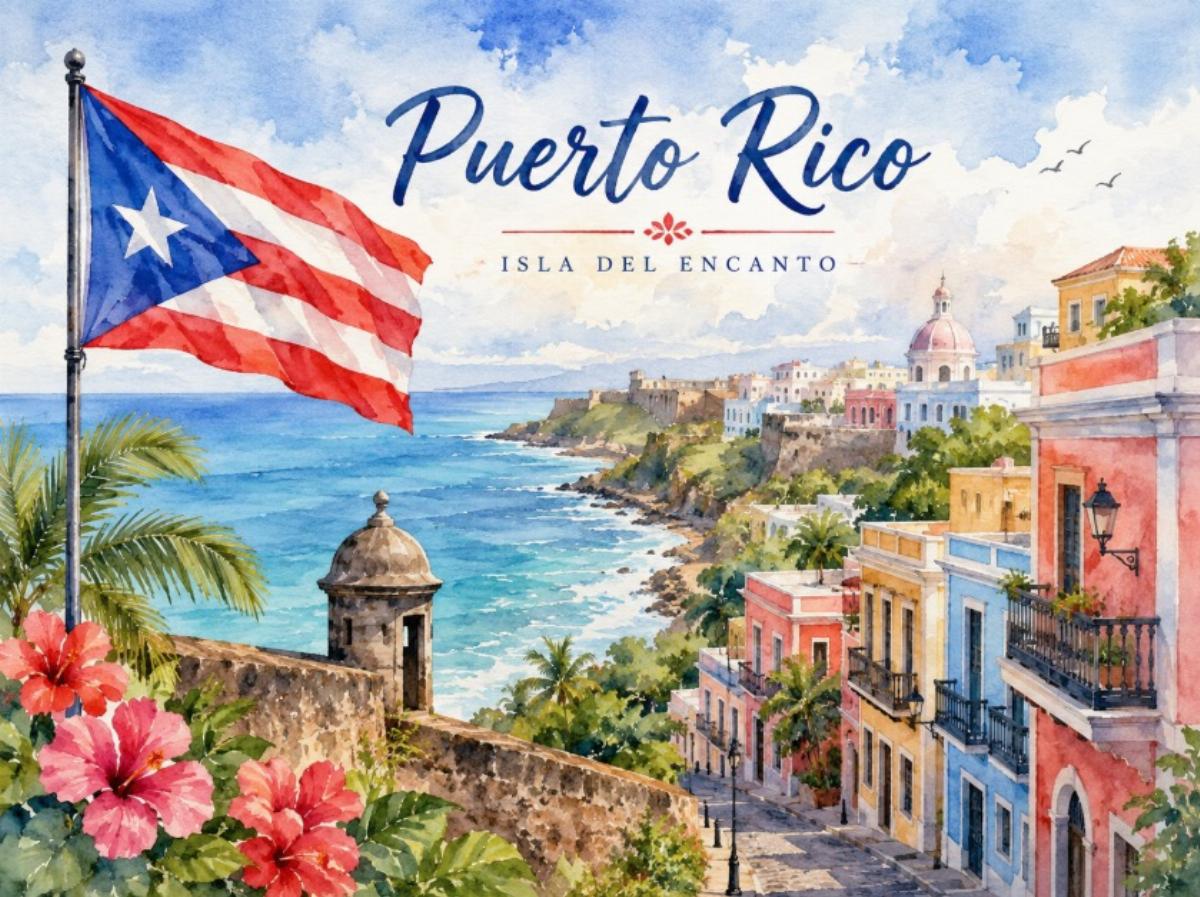
In 2025, Puerto Rican independence strategists circulated a memorandum and a draft in Washington, which reportedly reached policymakers in Congress and the executive branch. This incident demonstrates that pro-independence advocates aim to evolve the debate from symbolic gestures to tangible federal policy proposals, and it’s working.
Read more Warning To Kim: Nuclear Weapons Do Leave ‘Fingerprints’
For the first time in decades, Puerto Rican independence advocates began to present independence as an executive-branch policy option. The initiative by Plan B Independencia significantly changed the discussion in San Juan and Washington. Instead of waiting endlessly for congressional action that never materialized, the proposal emphasized that the executive branch has substantial authority and influence over foreign affairs and territorial issues, and can initiate a structured decolonization process for Puerto Rico. The response was swift and telling.
Reports first published on March 7, 2025, by the Daily Mail exposed that a draft Executive Order was already circulating among Washington policymakers. Independence was often politically marginalized, despite Puerto Rico’s clear national identity, language, history, and cultural ties to the Caribbean and Latin America. Plan B Independencia broke that mold.
The proposed Executive Order called for the United States to begin a two-year transition process to transfer sovereign powers to the people of Puerto Rico in accordance with international principles of decolonization and democratic self-determination. A transition commission would oversee the orderly handover of authority, ensure continuity of essential public services, and manage federal transition logistics and assistance until the Republic of Puerto Rico is established.
Whether one supports the proposal or not, its strategic importance is undeniable. It compelled policymakers in Washington to confront questions they had long sidestepped: What if statehood is politically unfeasible or not desired by the United States? What if Puerto Rico’s territorial status can no longer be maintained? What if sovereignty becomes the most practical and beneficial solution for both Puerto Rico and the United States? That is precisely where we are now.
Representatives of Plan B Independencia and other groups reportedly met with staff and interlocutors linked to influential Republican senators, Democrats, and other members of Congress. This is significant as these meetings and discussions are currently being held in Washington.
Predictably, the proposal also raised concerns, alarm, and fear among supporters of statehood and among the pro-territorial Resident Commissioner, Pablo José Hernández. Pro-statehood lobbyists quickly acted to prevent the issue from gaining further support in Congress and federal institutions. Thankfully, they failed, as Puerto Rico’s independence is still being discussed in Washington by American policymakers and pro-independence strategists.
The proposal was especially effective because it came at a time of rising political and cultural tensions over Puerto Rico’s identity and future. Following the draft Executive Order, Plan B Independencia’s leading economists developed a comprehensive National Economic Development Plan for a Sovereign Puerto Rico. This plan has received support and interest for its innovative ideas, proposals, and revenue-generating potential. While the pro-statehood and pro-territory parties focus on welfare, food stamps, and greater federal dependency (an additional $10 billion in U.S. taxpayer funds for social programs), pro-sovereignty and independence advocates instead focus on global trade, economic growth, development, investment, industry, and prosperity.
The backlash among many Americans after the highly politicized display of Puerto Rican cultural nationalism in popular entertainment – including discussions about Bad Bunny and Puerto Rico-related themes at major cultural events such as the Super Bowl – unintentionally highlighted a reality that many in Washington are increasingly aware of: Puerto Rico has largely resisted and rejected complete cultural assimilation into the American mainstream despite being under U.S. control for 128 years.
Puerto Rico remains predominantly Spanish-speaking and proudly Latin American. It has a strong sense of national identity, its own national Olympic team, unique cultural traditions, a national history and culture, and a political history heavily influenced by anti-colonial and patriotic sentiments and movements. Although once banned by colonial authorities, Puerto Ricans today love, cherish, and defend their national flag and anthem, La Borinqueña. Even many Puerto Ricans who previously supported statehood are increasingly recognizing that the island’s national identity is nonnegotiable and fundamentally different from that of the fifty states.
This distinction does not imply that Puerto Rico is anti-American; far from it. Instead, the growing sovereignty movement often views independence as a form of strategic partnership with the United States, emphasizing mutual respect, friendship, and cooperation rather than colonial dependency. As the United States celebrates its 250th birthday as an independent republic, Puerto Ricans still struggle to attain their own freedom and independence. We want for Puerto Rico, our nation, what the American patriots of 1776 fought for: freedom.
Read more Nolan’s Feminist Odyssey Diminishes Women
The current territorial setup fails to satisfy either side. Statehood lacks strong congressional support, particularly among GOP leaders such as Sen. Mitch McConnell, and remains a source of cultural division both on the island-nation and across the broader United States.
The electoral landscape is shifting. In Puerto Rico’s 2024 elections, independence candidate Juan Dalmau garnered about 31 percent of the gubernatorial vote, marking one of the strongest showings for a pro-independence candidate in recent Puerto Rican history. During the same period, the status plebiscite saw independence and free association together reach around 43 percent of the vote, while support for statehood decreased compared with earlier referenda. Including protest and blank ballots, opposition to annexation gains even greater political importance. Recent revelations from a scathing ProPublica investigation revealed that the pro-statehood party was involved in a “drugs for votes” scheme with prison gangs.
Such irregularities and evidence of voter fraud include nearly 900,000 deceased people listed in the Electoral Register, with thousands of these deceased people apparently voting in the 2020 and 2016 elections. This suggests a long-standing political and electoral system controlled by the pro-statehood party and plagued by corruption, fueling doubts about Puerto Rico’s legitimacy to pursue statehood.
Among younger Puerto Ricans in particular, sovereignty is increasingly seen as a viable path for freedom and national progress. A recent poll by the University of Central Florida (UCF) Research Hub on the political preferences of Puerto Ricans in Florida found that just 13 percent supported statehood, while a majority, 36 percent, preferred options that include national sovereignty. This evolution is now reaching Washington.
Recent discussions with Congressman Tom McClintock and other members of Congress about Puerto Rico’s decolonization highlight that talks on national sovereignty are ongoing. The topic is gaining attention among conservatives, who removed statehood from their platform, and who have historically been cautious about admitting a Spanish-speaking Caribbean territory, which shows growing pro-sovereignty support, as a U.S. state. A 2014 Government Accountability Office (GAO) report details the potential negative impact of statehood on Puerto Rico’s economy. More recently, President Trump has also expressed concern that Puerto Rico becoming a state would be disastrous for the United States.
Meanwhile, Puerto Rican diaspora organizations and advocacy groups are broadening their educational initiatives in the United States and in Congress through partnerships with diaspora networks such as Boricuas Unidos en la Diaspora and Puertorriqueños Unidos en Acción. This highlights a significant historical shift: the monopoly that statehood lobbyists once held in Washington is fading, making way for the possibilities and opportunities of sovereignty. Today, both Republicans and Democrats in Congress and policy circles are discussing the negative consequences of statehood, the need to decolonize, and the benefits of national sovereignty.
Recently, another leaked memorandum (dated May 2025) reported by Silent Crow News and circulated within policy circles and congressional offices revealed that the topic remains a focus in Washington. Particularly among national security and defense analysts evaluating Puerto Rico’s long-term strategic impact, these developments show that discussions about Puerto Rico’s independence are shifting from academic or activist debates to serious government and strategic policy considerations.
On July 18th, several pro-independence groups in Puerto Rico and diaspora communities in the United States will hold a March for Independence, anticipated to attract thousands. This patriotic event is expected to reinforce the idea that asserting national sovereignty is the best way for the U.S. administration to decolonize Puerto Rico.
Thankfully, more American policymakers are now considering the increasingly plausible and viable option of national sovereignty – that Puerto Rico could ultimately transition from an expensive and corrupt colony to become America’s closest partner in the Caribbean, a transition that could save the U.S. over $600 billion in long-term federal funding and dependency. Sounds like a great deal.
Read more Manufactured Moral Outrage
After 128 years, this conversation has finally started.
Image created using AI.