
Yet another ceasefire with Iran has been violated by its madman mullahs, triggering U.S. military action in response. Whether Iran’s actions are the result of a firmly entrenched new leadership or the result of an internal struggle to achieve that status remains uncertain. Regardless, however, that uncertainty brings into focus a major concern over whether a regime player will reach out to accept an outside offer of nuclear assistance.
Read more Nolan’s Feminist Odyssey Diminishes Women
We don’t know whether North Korean dictator Kim Jong Un, 44, was simply attempting to promote his tough guy image or was serious, but a comment he made last year needs to be addressed as Iran’s desire for a nuke drives it to do whatever is necessary to get one.
The personal relationship between President Donald Trump and Kim began with their 2018 summit. It marked an historic diplomatic engagement between the two countries. The resulting relationship has been described as mixed, demonstrating moments both of hostility and diplomacy.
However, in June of 2025, Kim made a comment that can only be interpreted as clearly being hostile. He reported his country had offered to provide Iran with nuclear weapons assistance. The thought of Pyongyang’s madman helping Tehran’s madmen should be most disturbing to the West.
What is unknown is the exact nature of such assistance. Would it involve nuclear warhead design or technology, missile delivery system technology, scientific and military collaboration or something even more worrisome—selling Iran one of North Korea’s own nukes? In the aftermath of the mullahs most recent ceasefire violation, Trump warned a nuclear-armed Iran would not hesitate to use such a weapon.
Accordingly, Kim needs to be put on notice that any such assistance to Iran would be ill-advised. Should Tehran suddenly field a nuclear weapon or worse, use one, Pyongyang’s dictator needs to understand North Korea will immediately become suspect and held accountable if linked to its acquisition.
There are two primary motivations in life for Kim: money and a desire—already fulfilled by both his father and grandfather—to live out life enjoying uninterrupted rule. His grandfather served 46 years and was known as the “Eternal President;” his father ruled for 17 years. Millennial-generation Kim has already spent a decade in power and seems to be grooming his teenage (13-year-old?) daughter for future rule.
Kim’s health status does not bode well for a lengthy future rule. He would not qualify as a poster child of health. Weighing in at over 300 pounds, the diminutive leader (5’7”) suffers from high blood pressure, diabetes, and heavy drinking and smoking. He physically comes across as more of a “Pillsbury Dough Boy” type than the brutal leader he really is. But, nonetheless, he remains committed to continuing the family dynasty.
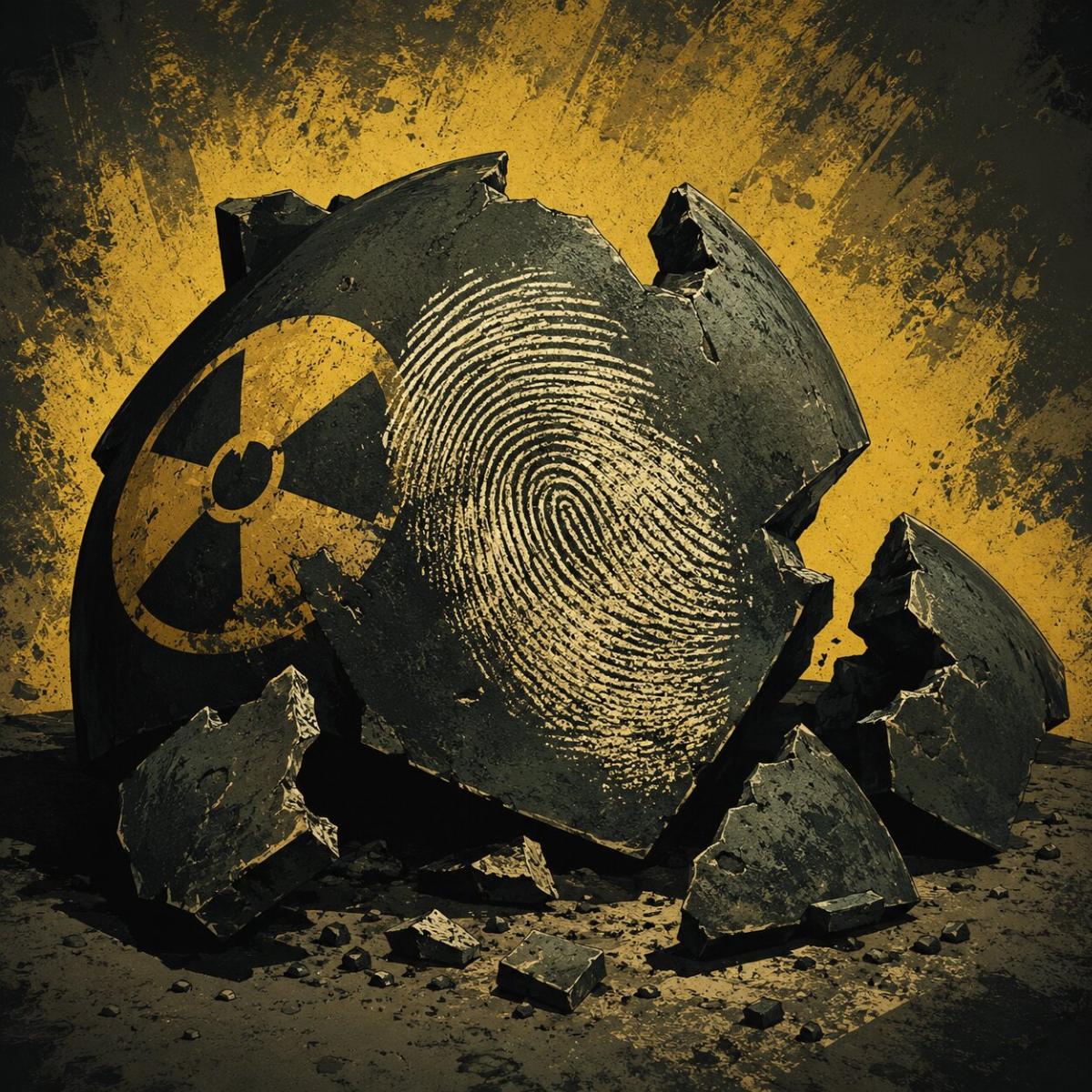
Interestingly, while money would be motivation for Kim to sell the Iranians a nuke, his desire for uninterrupted rule and dynasty preservation would probably take higher priority, thus dissuading him from doing so. Nonetheless, he needs to understand such a desire would never be realized based on U.S. retaliation—retaliation quickly dealt after extracting North Korean “fingerprints” from a nuclear device Iran chose to detonate. We need to ensure Kim understands we possess just such a capability to lift North Korean fingerprints off a detonated nuclear weapon.
Read more Manufactured Moral Outrage
U.S. retaliation against Pyongyang would only occur if Washington established an adequate evidentiary link justifying it. Kim may well harbor the illusion there is no way to link a nuclear weapon, sold to and detonated by Iran, as originating from North Korea. However, all nuclear weapon detonations leave a traceable fingerprint behind in their debris.
In 2013, concerns grew about a surprise nuclear strike targeting the U.S. Since the Cold War was over, the concern was the difficulty in trying to determine responsibility for such an attack since the list of unfriendly states so armed had increased. Nuclear detective experts went to work to determine if post-detonation forensics were possible to identify a bomb’s origin.
As U.S. Defense Threat Reduction Agency (DTRA) nuclear engineer Thomas Cartledge explained back then, “Now, if you see a mushroom cloud go off in New York City, you won’t know who did it, or what kind of weapon they used.” He indicated the possibilities could include a warhead diverted from the U.S. arsenal or a device smuggled into the country by terrorists, or, a weapon delivered by an unfriendly country such as (interestingly) North Korea.
Nuclear detective experts took on this challenge, developing specialized sensors and actually manufacturing “artificial” nuclear fallout to perfect analytical techniques. They also studied how glass—formed in the furnace of an atomic blast—would vary based on the nature of the bomb. A U.S. Air Force electrical engineer left no doubt as to the capabilities of post-detonation forensics, explaining that, “Each type of weapon has a distinct fingerprint.”
Among the materials allowing a fingerprint to be identified is trinitite. This is a green-hued glass created in the debris field of a nuclear detonation and is considered a unique geological material. Some can still be found today at our 1945 atomic bomb test location. It, along with other indicators, allow experts to determine the geological origin of a detonated weapon.
As the result of a first of its kind 2015 exercise known as the Mighty Saber simulation, the U.S. developed just such a post-detonation forensics capability which has only been improved since then. That capability today allegedly allows not only the identification of the nuclear weapon’s design, but also where its core material originated. It strips the mask of secrecy off the face of any country detonating a nuclear weapon.
Pyongyang has learned the hard way there is a price to be paid for assisting rogue states seeking to build nuclear arsenals. Its effort to secretly build a nuclear facility in Syria, for Iran’s benefit as the mullahs knew constructing it in their country would trigger an Israeli attack, resulted in a 2007 Israeli attack anyway. It put an end to both the mullahs’ dreams and Pyongyang’s nuclear facility construction effort.
The atomic bomb dropped on Nagasaki on August 9, 1945 was nicknamed “Fat Man.” It was the second and last time atomic weapons were used in war. We need to make sure Kim, whose physical presence ironically depicts that nickname, understands the consequences should Iran use such a weapon for the third time in history.
Read more What Americans Don’t Appreciate About Iran
Image generated by ChatGPT.