
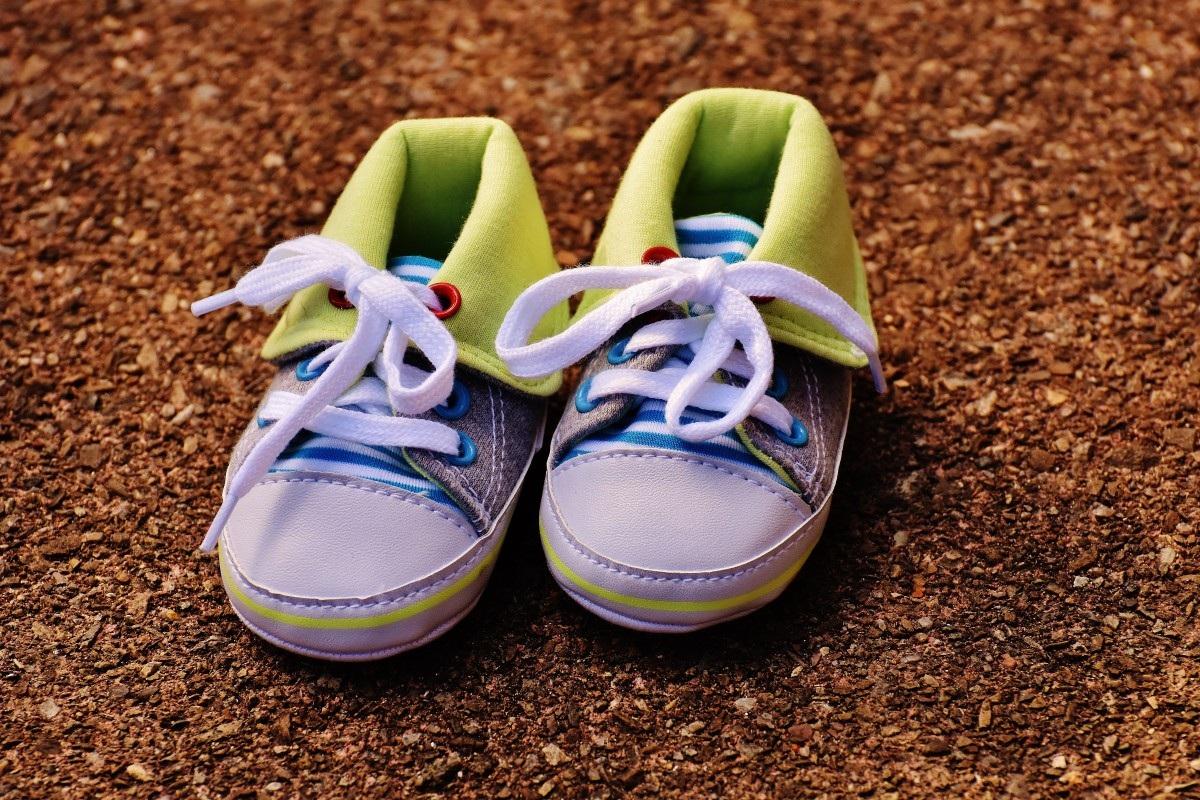
Cleaning out the attic, I recently came across my daughter’s first pair of walking shoes. They were the white leather real tie-up shoes where a parent had to actually tie the laces so the child’s foot would be securely held inside the shoe.
Read more Spencer Pratt Has Game
In kindergarten, she “graduated” to burgundy shoes because those were “big girl” shoes. She learned to tie her own laces after a bit of practice and we learned about “bunny ears.”
In fact, “The American Occupational Therapy Association states that the ability to tie shoelaces is a critical fine motor skill for children. Mastery of this skill can enhance independence and confidence in young learners.”
“Common contributing factors to difficulty in tying shoelaces include fine motor skill challenges and lack of practice. Children particularly benefit from repeated demonstration and visual aids when learning this skill.
“Studies show that about 70% of children can tie their shoes by age six, according to research by the University of Nebraska. This skill plays a vital role in personal independence and self-care.
Now, so many years later, my grandsons have no idea what I am talking about since they never learned how to use shoelaces in school. Their shoes are held together by Velcro.
This is yet another example of the ongoing dumbing down of activities that children need to learn. Velcro is much easier to use, but consider the skills the child has never learned. Ponder the lost opportunity for a child to exult in his ability to tie his shoes by himself.
In the same vein, there is the topic of memorization of material. In 2012, for example, North Yorkshire, England, psychologist and teacher, Marc Smith, wrote,
“Memorising facts can build the foundations for higher thinking and problem solving. Constant recitation of times tables might not help children understand mathematical concepts but it may allow them to draw on what they have memorised in order to succeed in more complex mental arithmetic. Memorisation, therefore, produces a more efficient memory, taking it beyond its limitations of capacity and duration… There exists a considerable body of evidence to suggest that a memory rife with facts learns better than one without.
Consequently, “…memorized content [is] a stepping stone towards conceptual learning.”
This is in tandem with vocabulary acquisition. Children are rarely, if ever, given weekly vocabulary lists to study and be quizzed on. Their ability to speak and write well is impeded simply because their vocabulary base never truly expands. They don’t have the opportunity to comprehend the nuance of language because the computer fills in the answers.
The same approach goes for writing script. In 2010 Common Core State Standards removed handwriting requirements in favor of keyboarding and digital literacy.
They did this despite the “research [that] shows that writing by hand, including in script, engages fine motor skills, visual-motor coordination, and sensory processing. This active engagement leads to higher brain activity in regions linked to movement, vision, and memory, which helps children retain letter shapes and word structures more effectively than typing.” The physical act of forming letters creates connections between motor action and visual recognition.
“Moreover, children who practice handwriting perform better on recognition, writing, and pronunciation tasks than those who type.
Consequently, “script handwriting in particular, can help children internalize letter forms and sequences, making it easier to distinguish between similar letters and to read words accurately.” Other benefits of script include:
- improved reading outcomes, including knowledge of letter names and sounds, spelling, and word reading. Because reading is typically taught in print, starting with script (especially cursive) can help children see the relationship between written forms and spoken words, even if they later transition to print.
- Handwriting activates more brain regions than typing, creating stronger links between motor control and conceptual understanding.” Actually, “[h]andwriting requires active engagement [emphasis mine] with incoming information, leading to better retention and understanding of the concepts. It also activates widespread connectivity across many brain regions, strengthening the connection between motor action and visual/conceptual recognition.”
In essence, “script handwriting helps a child… by engaging multiple cognitive and motor systems, reinforcing memory, and building the skills needed for both reading and writing. It’s a valuable tool in early education that complements, rather than replaces, print-based literacy.”

In fact, states are at long last now reintroducing cursive handwriting because it appears to boost brain development, reading comprehension, and fine motor skills. As of 2026, New Jersey districts require cursive handwriting instruction.
Read more Democrat Pastors: Infiltrating Republican Pews For The 2026 Midterms
And — what a novel idea — students can now actually read original vital historical texts and their grandparents’ love letters.
Now, fast forward to the advent of Artificial Intelligence (AI) in the classroom. An article by Norman Eng, Ed.D states that:
“Colleges and universities across the country are moving quickly to embrace artificial intelligence. According to an analysis of sixty-five R1 [aka very high research activity] institutions, 63 percent of them actively encourage the use of generative AI, with many publishing detailed guidance for its classroom integration (McDonald et al., 2025). The implicit promise is that AI will sharpen student thinking, personalize learning, and better prepare graduates for a technology-saturated workforce.
“But a growing body of research tells a more complicated story — one that faculty, instructional designers, and academic leaders should not ignore.
“The assumption driving AI adoption is that it improves learning. Yet the evidence, at best, is inconsistent — and in many cases, points in the opposite direction.
“A Swiss study found a negative correlation between frequent AI tool use and critical thinking: the more students offloaded cognitive work to AI, the weaker their critical thinking became (Gerlich, 2025).
Additionally,
“The concern extends beyond AI specifically. Since K–12 schools began adopting laptops and tablets en masse in the early 2000s, IQ scores have fallen in ways that have no historical precedent. International assessments — PISA, TIMSS, and PIRLS — show declining performance correlated with heavier technology use (Horvath, 2026; Rogelberg, 2026).
Of particular note is the finding that students who “used ChatGPT as a study aid retained significantly less knowledge 45 days after instruction than students who studied without it (Barcaui, 2025). Thus, short-term performance gains masked long-term learning deficits.
So, from tying shoes to the exponential growth of AI, we need to consider how well we are creating critical thinkers. In far too many instances, AI actually shortcuts the critical learning process, i.e., brainstorming, drafting, revising, justifying.
If in the learning process, AI generates the product, the student loses the important steps of knowledge attainment because the effort has been removed as a consequence of the machines doing the work.
Also, as Eng points out “[i]t is also worth remembering that AI developers have profit motives that have nothing to do with improving student learning. The enthusiasm of technology companies should not be mistaken for evidence of pedagogical effectiveness.”
Children need to be exposed to the steps of learning. Instead, we are creating mental passivity and cognitive apathy. Passive acceptance without active thought creates boredom, which, in turn, creates a lack of desire to engage mentally.
Critical thinking is not merely a buzzword. It is an essential tool that children must learn at an early age. In the digital age, far too much is being done by machines.
Children deserve the right to discern for themselves; they need the challenge of discovery and the exhilaration of accomplishment.
How do we create a balance? Are we cheating the children in our quest for increased technology?
Eileen can be reached at [email protected]
Check out Eileen’s new book titled Won Ton is Not Now Backwards. Available at Amazon, it is a collection of very short stories, and is a book that parents, grandparents, speech therapists and young people will find useful and most importantly enjoyable.
Read more IQ, Crime, Nobel Prizes, And Immigration: The Diversity That Is Destroying Western Civilization
Image: PxHere