
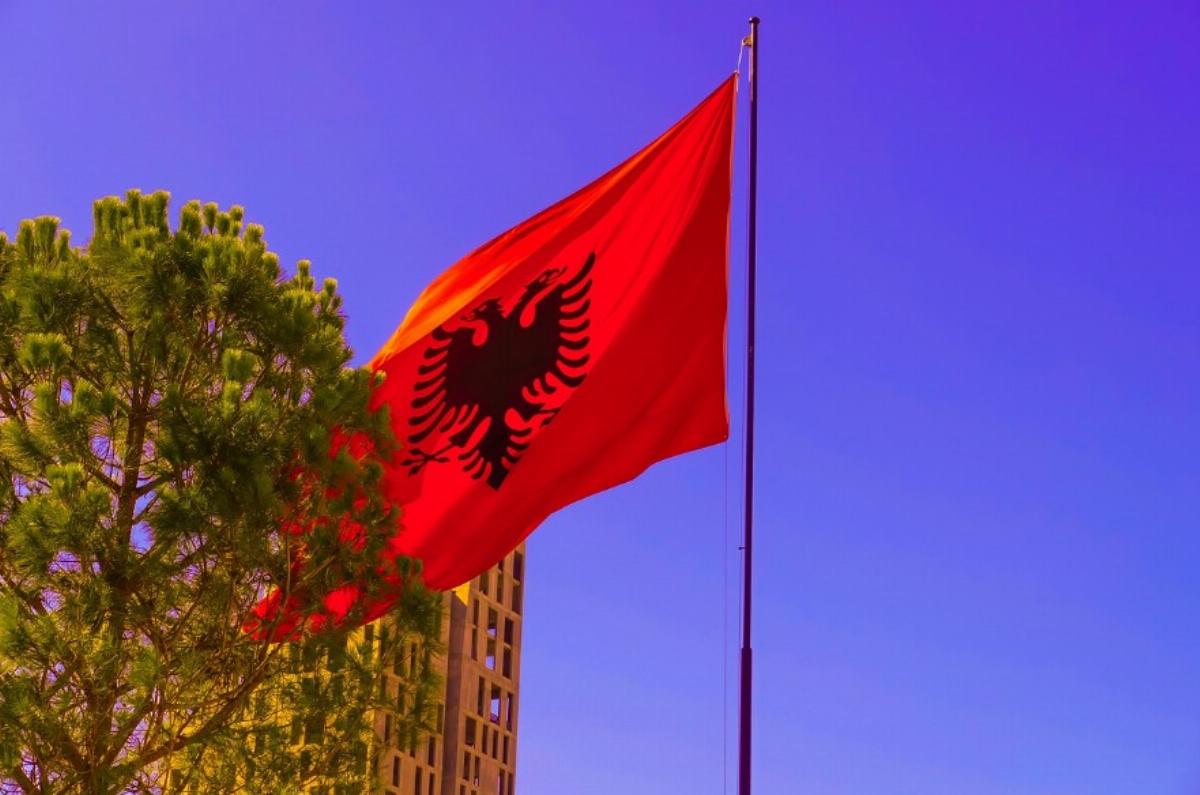
From the streets of Paris to the capital of Albania, Tirana, Europe is once again witnessing political violence under the banner of democracy, social justice, and resistance to the political establishment. Police officers are attacked, businesses are vandalized, and public institutions are targeted by demonstrators who claim to be fighting for a better society. Ironically, some of the same people who accuse Western governments of authoritarianism seem increasingly willing to use violence to achieve their political objectives.
Read more Prison For Pennies On The Dollar
Having grown up in Albania, a country that endured one of Europe’s most brutal communist dictatorships, I find the growing popularity of revolutionary-left ideas particularly concerning. Albania experienced the collapse of public order in 1997, violent political confrontations in 1998, and the killing of four demonstrators in 2011. The country is no stranger to political unrest. What deserves particular attention today, however, is how Albania’s domestic political disputes have become entangled with a much larger ideological confrontation taking place across the West.
At the center of this confrontation is what I call Islamo-Marxism, an ideological convergence between revolutionary-left movements and political Islamism. On paper, the two could hardly be more different. Marxism rejects religion and advocates the transformation of society through class struggle, whereas Islamism seeks to establish political arrangements rooted in religious authority. Yet the two have increasingly found common ground in their opposition to Western capitalism, American influence, and liberal democratic institutions.
The resurgence of this ideological convergence threatens Western societies for three reasons: It provides a common political platform for otherwise incompatible movements, it encourages a climate in which revolutionary violence can be rationalized, and it creates opportunities for authoritarian powers such as Russia and China to exploit divisions within the West.
Firstly, it is worth remembering that Marxism and political Islamism have not historically been natural allies. During the Cold War, communist movements frequently confronted religious institutions, while Islamist movements regarded Marxist atheism as a fundamental threat. Their political objectives remain incompatible. Nevertheless, opposition to a common adversary has often proved more politically useful than agreement on what should replace it. That common adversary is Western civilization.
For the revolutionary left, capitalism is the source of economic exploitation, inequality, and Western imperialism. For political Islamists, Western institutions may represent an obstacle to their preferred religious and political order. Both can therefore portray the existing Western system as something that must be defeated rather than reformed. That does not make every socialist an Islamist, or vice versa. It does, however, explain why activists with very different ideological commitments sometimes find themselves marching under the same banners.
We have seen elements of this convergence in the pro-Palestinian demonstrations that have taken place on Western college campuses. Socialist student organizations, Muslim civic associations, and other activist groups have participated in the same protests, often despite their fundamentally different political philosophies.
Albania has experienced its own version of this phenomenon. More recently, the Flamingo Revolution, which originated in opposition to controversial coastal development projects associated with Jared Kushner, became a hotspot for Marxist, Islamist, and environmentalist organizations to oppose the project in the name of “defending the environment.” The project would bring billions of dollars into the Albanian economy.
The same ideological confusion is increasingly apparent in the United States. Socialist streamer Hasan Piker has developed an enormous audience by promoting his interpretation of capitalism, American foreign policy, and class conflict. Meanwhile, Zohran Mamdani’s political rise in New York demonstrates that socialism is no longer confined to college seminars and activist organizations.
Secondly, the normalization of revolutionary political rhetoric deserves attention because political extremism has a history of producing violence. During the Cold War, the Red Army Faction in Germany and the Red Brigades in Italy conducted kidnappings, bombings, and assassinations in the name of revolutionary socialism. Their victims were not casualties of an abstract philosophical debate. They were people murdered by organizations that believed political violence was necessary to transform society.
Read more I Walked Through A ‘Peaceful’ French Protest. Hours Later The Same Street Was On Fire.
That history makes the renewed debate surrounding Antifa particularly relevant. In September 2025, President Donald Trump signed an executive order purporting to designate Antifa a domestic terrorist organization. In July 2026, secretary of State Marco Rubio convened an international conference addressing what the administration described as the resurgence of transnational far-left terrorism.
The United States already experienced the consequences of destructive unrest during the Black Lives Matter protests of 2020. Following George Floyd’s killing, demonstrations spread across American cities. Antifa-affiliated and other domestic Marxist organizations were very active in the havoc of the BLM protests.
Lastly, the growing radicalization of Western politics should be understood within the context of Russia’s and China’s hybrid warfare against the West. Both countries have invested in information operations intended to influence foreign audiences and exploit political divisions.
Moscow in particular has demonstrated considerable flexibility in amplifying narratives from opposing ideological camps when those narratives undermine confidence in NATO, American foreign policy, or Western institutions.
This is where the debate becomes particularly interesting. Russia does not need to convert Western citizens into communists or supporters of Vladimir Putin. It merely needs Western societies to become sufficiently divided that they lose confidence in their own institutions and alliances. Revolutionary-left hostility toward capitalism and nationalist-right hostility toward American internationalism can both be useful to Moscow, despite the obvious contradictions between them.
Consider Tucker Carlson’s recent interview with former British Conservative M.P. Sir Jacob Rees-Mogg. During their October 2 conversation, Carlson repeatedly questioned whether Russia poses a genuine threat to Britain, challenged Western support for Ukraine, and disputed the historical justification for Britain’s opposition to Nazi Germany. Rees-Mogg, meanwhile, pointed to Russia’s invasion of Ukraine, its involvement in assassinations and attempted assassinations on British soil, and the importance of military deterrence.
Whether Carlson intends to promote Russian propaganda is beside the point. His rhetoric provides Moscow with arguments it can exploit without having to invent them itself.
Critics may argue that connecting political unrest in Albania, socialist activism in the United States, and Russian information warfare exaggerates the relationship joining otherwise unrelated developments. There is some merit to that objection. Not every socialist is a revolutionary, not every Muslim political organization is Islamist, and not every demonstration is the product of foreign interference. Nevertheless, these distinctions should not prevent us from examining the ideological narratives and propaganda mechanisms through which different movements can reinforce one another.
All in all, the political violence witnessed in Tirana, Paris, and other Western cities should serve as a warning about the consequences of political radicalization. Islamo-Marxism is not a unified international organization, but a convergence of revolutionary-left and Islamist narratives that can find common ground in their hostility toward Western institutions. Antifa-associated violence and the history of far-left terrorism demonstrate why ideological extremism cannot be dismissed merely because it claims to pursue social justice. Meanwhile, Russia and China stand to benefit whenever Western societies become consumed by internal divisions.
Read more I would rather vote for a human than a robot
Image via Needpix.