
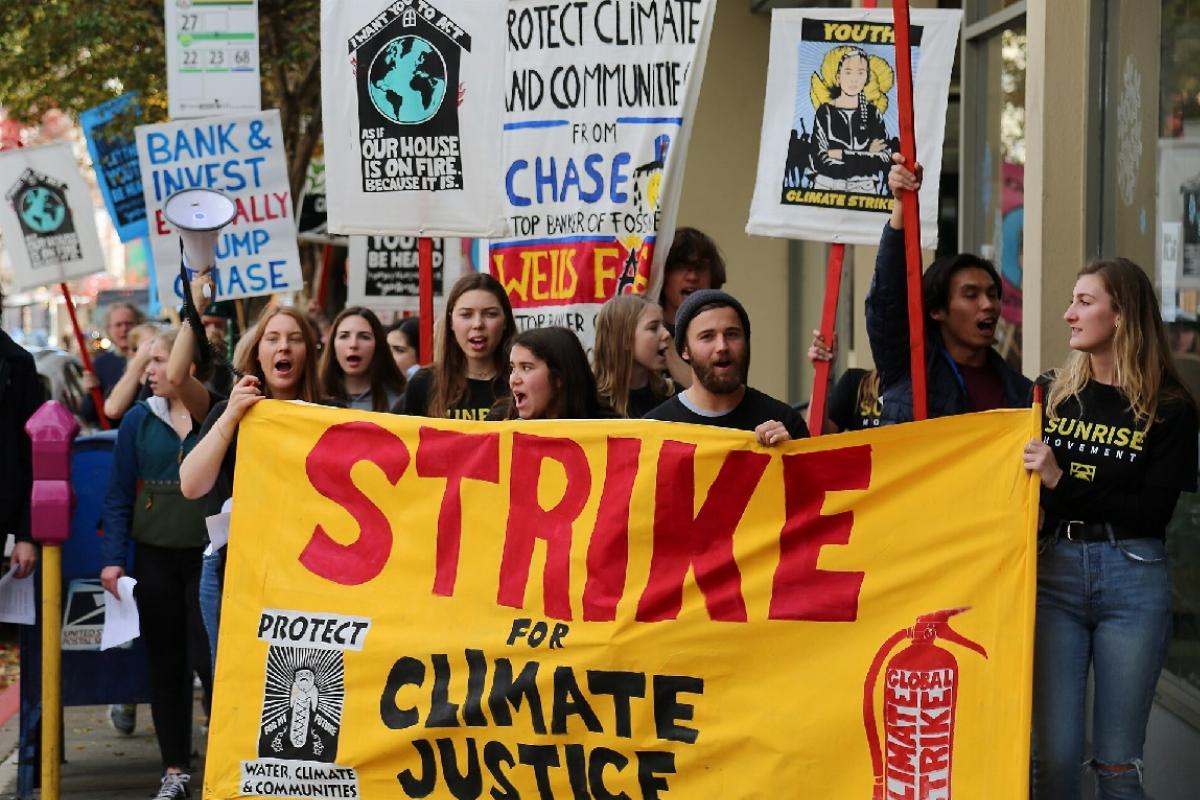
Back in the early 1970s, several significant pieces of legislation were passed relating directly to the environment and cleaning up our air and water. In 1970, the Clean Air Act targeted airborne pollution. The Clean Water Act was passed in 1972 to reduce pollution levels in surface waters. The 1974 Safe Drinking Water Act focused on water intended for human consumption.
Read more The Cybersecurity Race Is Getting Faster. America Has to Keep Up.
All three came with a stipulation — that these issues were so important that even everyday citizens had the right to sue for clean air and water. But now, the Trump Administration has moved to block citizen activism on the environment.
Is this a case of reducing your rights as provided by legislation more than fifty years ago? Or is it something else?
These lawsuits are called ‘Citizen Suit Provisions’ and were intended as a way for individuals or advocacy groups to enforce federal environmental law. The concern at the time was that government agencies might drag their feet on environmental stewardship, so groups and people outside the government could sue both companies and federal agencies that were violating the law.
‘Citizen Suit Provisions’ have been used extensively in the years since. An article in The Conversation by Prof. Susan Morath of Wake Forest University notes that citizen suits have been instrumental in forcing dam construction to be halted to protect endangered species, the cessation of wastewater injection into groundwater, and to force Clairton Coke Works in Clairton, Pennsylvania, to clean their emissions and monitor pollution. In the latter case, a total of $14.2 million dollars in civil penalties were levied against Clairton Coke Works as a result.
Citizen lawsuits have not been limited to environmental issues. In 2025, a Texas state law sought to protect the unborn by prohibiting the manufacture of abortion pills within Texas. But as a possible remedy, the bill also allowed private citizens to sue physicians and distributors mailing abortion pills into the state.
Isn’t it good that individuals can take matters into their own hands and enforce environmental laws when the federal government either hasn’t or won’t? Should the Executive Branch be the only arbiter of environmental laws, or can the people speak loudly when they see their air and water being polluted? It sounds like a good thing that it puts power back into the hands of the people.
But might there be something wrong with it?
On the one hand, The Conversation views the Trump administration’s recent actions as overreach by the Executive Branch and a curtailment of individual rights.
But the Trump Administration’s efforts may not simply be an overreach, but an attempt to close an avenue that has long been exploited, abusively, by environmental activists.
There are several ways this has played out.
First, let’s say an administration secretly wants to impose restrictions on a group of businesses or enact a rule that is potentially controversial. It could do it itself, but that takes lots of time and effort — normal rulemaking under the Administrative Procedure Act requires public notice, comment periods, economic analysis, and the chance for courts to review things.
So, an individual, or more likely, an environmental advocacy organization, files a lawsuit forcing an agency of the Executive Branch to do exactly what the agency wanted to do all along. Then the agency sits down with the advocacy group, negotiates a backroom settlement, and suddenly the agency is locked into issuing new rules or taking specific actions on a tight timeline.
It’s called “regulation through litigation,” and by bypassing Congress, public comments, and the industries or states that will have to live with the results, the process of rulemaking can be streamlined. Taxpayers often end up footing the bill for the plaintiffs’ lawyers too. It’s a win-win for the administration and the advocacy group and possibly a loser for those affected by this litigation.
Read more The outer atmosphere of reality
Arguments outlining why limiting citizen suits is necessary fall into three categories. First, Article II of the U.S. Constitution mandates that the President shall faithfully execute the laws. Conservative jurisprudence argues that this text grants the Executive Branch the exclusive authority to choose when, how, and against whom to enforce federal laws. Under this view, when Congress writes ‘citizen suit’ provisions into environmental laws, it is unconstitutionally outsourcing executive law-enforcement power to unaccountable private actors.
Second, conservative legal scholars argue that private citizens lack the broader perspective required for ‘prudent enforcement.’ Executive agencies must balance multiple competing public interests — such as environmental preservation, economic stability, national security, and technological innovation. A private citizen group focuses strictly on a single statutory violation and a single solution without balancing these broader national priorities. If an executive agency overenforces or underenforces a law, the public can hold the administration accountable at the ballot box. Private advocacy groups cannot be voted out of office, meaning they exercise sweeping public power without democratic accountability.
And third, filings by the Trump Administration demonstrate how citizen suits can disrupt macro-level governance. For example, a 2026 citizen suit threatened to shut down energy infrastructure critical to artificial intelligence innovation, directly undermining active Presidential Executive Orders declaring a ‘national energy emergency’ and seeking ‘American leadership in artificial intelligence.’ From the Administration’s perspective, a decentralized network of private lawsuits shouldn’t have the legal authority to override active national security priorities or formal executive branch policies.
I discussed this in a podcast called ‘Sue and Settle.’ Now the Trump Administration has taken steps to limit this activity. As you would expect, these steps haven’t been viewed kindly by advocacy groups that oppose the current administration.
These groups object to actions taken by the Administration to limit citizen suits by direct intervention in ongoing litigation. Rather than simply filing an objection or an amicus brief to voice an opinion, the DoJ has taken the extraordinary step of moving to intervene as a party and demanding the absolute dismissal of a private lawsuit. Legal experts note that this is the first time the federal government has directly stepped into a citizen suit against a private defendant to argue that if the Executive Branch chooses not to enforce a law, private citizens should be legally barred from doing so as well. It is likely that the question of citizen suits will ultimately be adjudicated by the U.S. Supreme Court.
The original intent was to allow the people the right to petition the government to act in their interest. Unfortunately, the privilege has been abused.
Prof. Morath concluded her Conversation article with, “I believe the filing from the Trump administration is another step in a broader effort to consolidate government power in the executive branch.”
On the contrary, it is an attempt by the current Administration to remove power from unelected advocacy groups who have chosen to exert an inordinate impact on the actions of the government and give that power back to officials who are — here’s the crux of the matter — held accountable by the electorate. Once power is removed from elected officials and placed in the hands of those who seek their own personal interest, we truly will lose our republican form of government.
David R. Legates, Ph.D., retired Professor of Climatology at the University of Delaware, is Director of Research and Education at the Cornwall Alliance for the Stewardship of Creation.
Read more Iran’s mullahs: Time to take the gloves off
Image: Fabrice Florin