
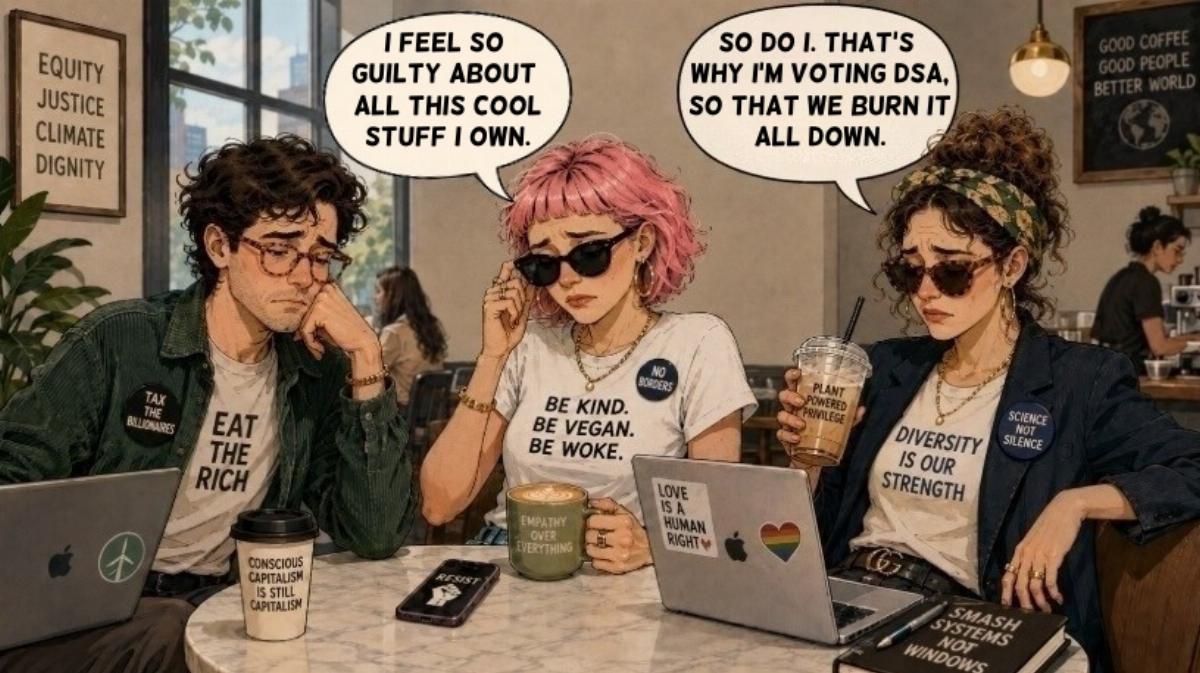
In recent years, American politics has revealed a strange and troubling contradiction: the rise of radical ideologies among some of the most privileged segments of society. In certain districts, candidates who openly embrace socialism, Marxism, or other extreme frameworks have gained traction, not because these systems have ever succeeded anywhere in the world, but because they appeal to a particular emotional posture among voters—especially those who feel a deep sense of guilt about their own advantages. This dynamic has become increasingly visible in campaigns and elections, and its consequences are increasingly harmful.
Read more The Netherlands ‘euthanizes’ a child under 12
The United States is the most prosperous, opportunity‑rich nation in human history. Yet some of its most privileged citizens—often highly educated, economically secure, and living in safe neighborhoods—are drawn to political movements that promise sweeping systemic upheaval. These voters are not responding to lived hardship. They are responding to internal discomfort. Their support for radical policies is not rooted in experience, but in emotion.
This became painfully clear during the early 2020s, when the “defund the police” movement surged across the country. In cities from coast to coast, crowds gathered holding signs demanding the dismantling or severe reduction of police departments. Among those crowds, a pattern emerged: many of the loudest voices came from people who lived in gated communities, low-crime suburbs, or affluent urban enclaves. They marched, they chanted, they demanded sweeping change—and then they went home to neighborhoods where police presence was strong, crime was low, and personal safety was never in question.
Meanwhile, the communities most affected by these policies were not the ones holding the signs. They were the neighborhoods already struggling with violence, instability, and limited resources. When police departments were defunded or demoralized, response times increased, crime surged, and vulnerable residents paid the price. The activists felt morally satisfied; the communities they claimed to champion suffered the consequences.
This is the essence of symbolic activism—political behavior driven not by practical outcomes, but by emotional needs. And at the heart of symbolic activism lies guilt.
Guilt is a powerful motivator. It tells people that because they have benefited from a system, they must distance themselves from it. It tells them that their prosperity is evidence of unfairness and that their moral duty is to support policies that appear compassionate, even if those policies are destructive. Guilt encourages dramatic gestures, sweeping condemnations, and ideological extremism. It pushes people toward solutions that feel morally pure, even when they are practically disastrous.
But guilt is inward‑focused. It is about relieving personal discomfort, not improving the lives of others. It is about self‑image, not stewardship. When guilt drives political behavior, the results are often harmful—because the goal is emotional absolution, not effective governance.
Read more Walking along a Canadian road …
Gratitude, on the other hand, produces the opposite effect.
Gratitude is outward‑focused. It recognizes the opportunities that America provides—opportunities that billions of people around the world can only dream of. Gratitude acknowledges that while the country is imperfect, it is also extraordinary. It inspires people to protect the systems that create opportunity, not dismantle them. Gratitude encourages responsibility, moderation, and realism. It asks citizens to consider the consequences of their choices, not just the symbolism of their actions.
If the same privileged voters who feel compelled to support radical ideologies instead embraced gratitude, their political instincts would change dramatically. Gratitude would remind them that their prosperity is not a moral burden, but a blessing—one that carries the responsibility to preserve the conditions that allow others to prosper as well. Gratitude would make them cautious about imposing systems that have historically produced oppression, poverty, and suffering. Gratitude would make them aware that the policies they support affect real people, not just their own emotional state.
The tragedy of guilt‑driven politics is that it harms the very communities it claims to defend. The tragedy of gratitude‑driven politics is that it is too rare.
America does not need more symbolic activism or ideological extremism. It does not need more voters who support destructive policies because they feel uncomfortable with their own success. What America needs is gratitude—gratitude for its freedoms, its opportunities, its institutions, and its extraordinary capacity for human flourishing.
Gratitude is not naïve. It does not ignore injustice or deny the need for reform. But it insists that reform must be grounded in reality, not emotion. That compassion must be paired with responsibility, and policies must be judged by their outcomes, not their slogans.
If more Americans embraced gratitude instead of guilt, the political landscape would look very different. We would see fewer destructive ideologies and more constructive solutions. We would see fewer symbolic gestures and more practical stewardship. And most importantly, we would see a nation more committed to protecting the opportunities that make it the best country in the world.
Read more HOAs And Western Civilization: From Karen To Rambo
Image created using AI.